
How Digital Platforms Increase Yard Jockey Efficiency
6 min read

Key takeaways
- Poor yard coordination leads to detention charges, unsafe trailer movements, and strained carrier relationships. These issues build over time as delays and inconsistencies become routine.
- Yard jockeys keep trailers moving between gates, yard slots, and dock doors, which improves location accuracy and reduces the need for repeated manual yard checks.
- When yard jockey movements are structured, docks stay supplied and congestion drops. Driver wait times also become more predictable.
- Adding real-time tracking and automated task assignment removes guesswork from dispatching. This lets yard teams run consistent, data-driven trailer flows.
Yard jockeys solve one of the biggest yard problems that transportation teams face: poor trailer visibility between manual checks.
Your staff walks the yard nearly four times daily, clipboard in hand, trying to locate trailers that have moved since the last check. Between audits, you lose track of trailer locations, arrival times, and which units are ready for dock assignment.
This creates scheduling chaos and delays dock loading.
Ready to transform your supply chain?
Increase efficiency and productivity. Say goodbye to delays, handwriting errors, and time-intensive manual data entry.
Yard jockeys solve this visibility problem by maintaining continuous trailer positioning and real-time location updates. They eliminate the need for manual tracking by managing trailer flow as part of their daily routine.
What Is a Yard Jockey?
Executive summary: A yard jockey is the operator responsible for keeping trailer flow organized inside the facility. That role is essential because trailer positioning directly affects dock utilization, dwell time, and overall yard efficiency.
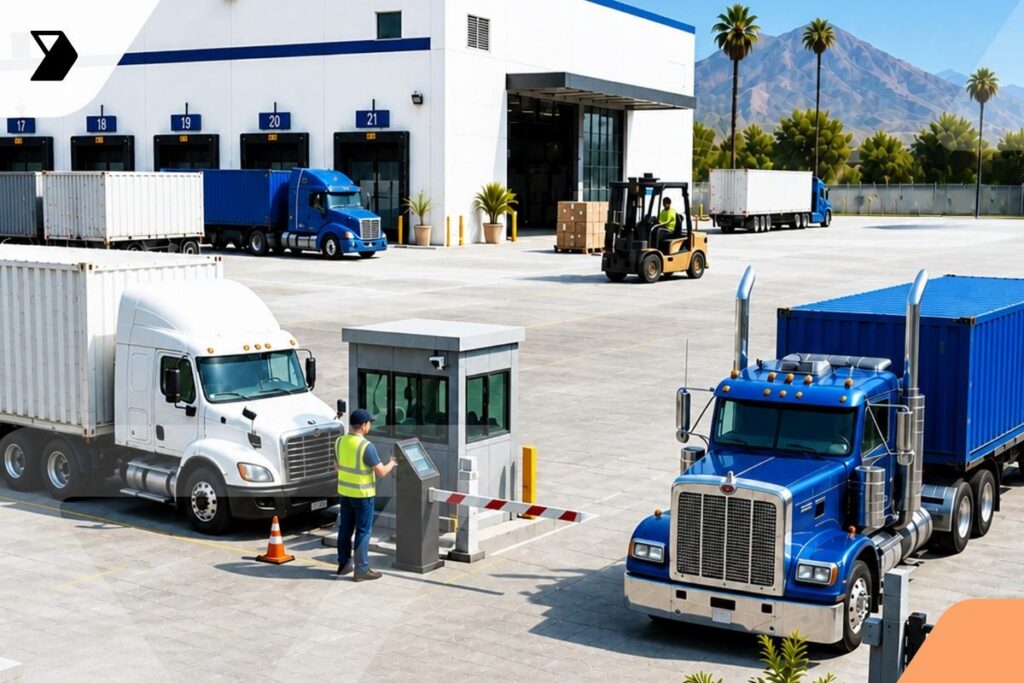
A yard jockey is a specialized equipment operator who manages trailer positioning and movement within your facility’s yard.
Unlike long-haul drivers who focus on highway transportation, yard jockeys coordinate trailer flow between dock doors, staging areas, and parking spots. They’re your critical link between incoming carriers and warehouse teams.
Without organized yard jockey operations, it is easy to lose visibility into trailer locations, dwell times, and movement status. This missing information creates delayed dock assignments and misplaced trailers that cascade into broader facility bottlenecks.
How Yard Jockeys Impact Your Supply Chain
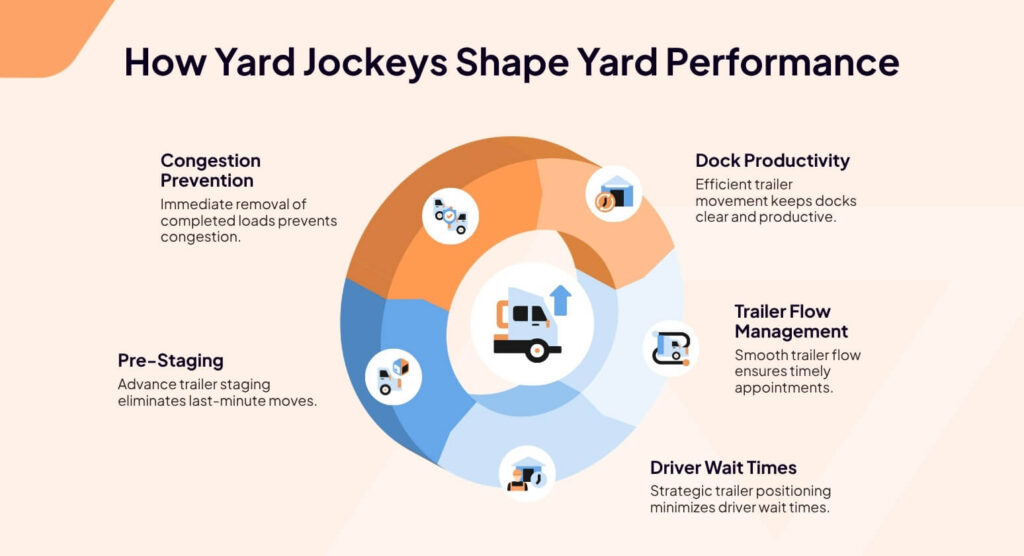
Yard jockeys control how trailers move through your facility. Their day-to-day actions determine whether docks stay productive or become bottlenecks. In practice, this comes down to how they execute a few core responsibilities:
- Move trailers between dock doors, staging areas, and yard parking to keep docks clear and continuously supplied.
- Manage trailer flow from gate check-in to final dock positioning so trailers are ready when scheduled appointments begin.
- Position trailers based on shipping schedules to minimize driver wait times and avoid detention charges.
- Pre-stage inbound and outbound trailers in advance to eliminate last-minute moves and keep dock utilization steady.
- Remove completed loads from dock doors immediately and relocate them to departure areas to prevent congestion buildup.
What Happens When Yard Jockey Operations Break Down?
Executive summary: When yard jockey operations break down, trailer visibility disappears, and delays spread quickly across the yard. The result is more detention, poorer dock coordination, and weaker carrier confidence in your facility.
When yard jockey operations fail, drivers sit idle at gates while trailers disappear into unmapped locations across your facility. You lose track of which trailers contain priority freight. This forces dock supervisors to make blind scheduling decisions.
Idle times that exceed your contracted free-time windows trigger detention fees that directly impact your freight budget. These movement breakdowns damage carrier relationships. They force your team into constant reactive issue management.
Manual Yard Audits and Lost Trailer Tracking
Without real-time tracking systems, your team walks the yard multiple times daily to locate trailers and verify positions. These manual audits consume valuable labor hours while still missing trailer movements, status changes, and exact locations between checks.
You lose critical visibility into dwell times and positioning accuracy. Staff can’t confirm which trailers moved or when specific loads arrived without physical verification.
Safety Incidents and Compliance Failures
Poor communication between spotters, drivers, and dock workers creates dangerous blind spots where equipment movement goes uncoordinated. Your team faces increased collision risks when multiple operators work without knowing each other’s location or next moves.
Manual compliance tracking leaves gaps in safety documentation that auditors flag during inspections. These coordination failures put both personnel safety and regulatory standing at risk.
Impact on Carrier Relationships and Detention Fees
Driver wait times beyond industry standards trigger detention fees that quickly escalate freight costs. Your carriers start routing their best equipment to facilities that respect driver time.
Poor yard coordination creates downstream scheduling conflicts where drivers miss subsequent pickup appointments. This damages your reputation as a preferred shipper. Capacity becomes harder to secure during peak shipping periods when carriers remember which facilities waste their drivers’ hours.
How Do You Build an Efficient Yard Jockey Operation?
Executive summary: Strong yard jockey operations depend on the right people, equipment, and process discipline. Facilities that treat this role as a core operational function usually see better trailer flow and fewer yard delays.
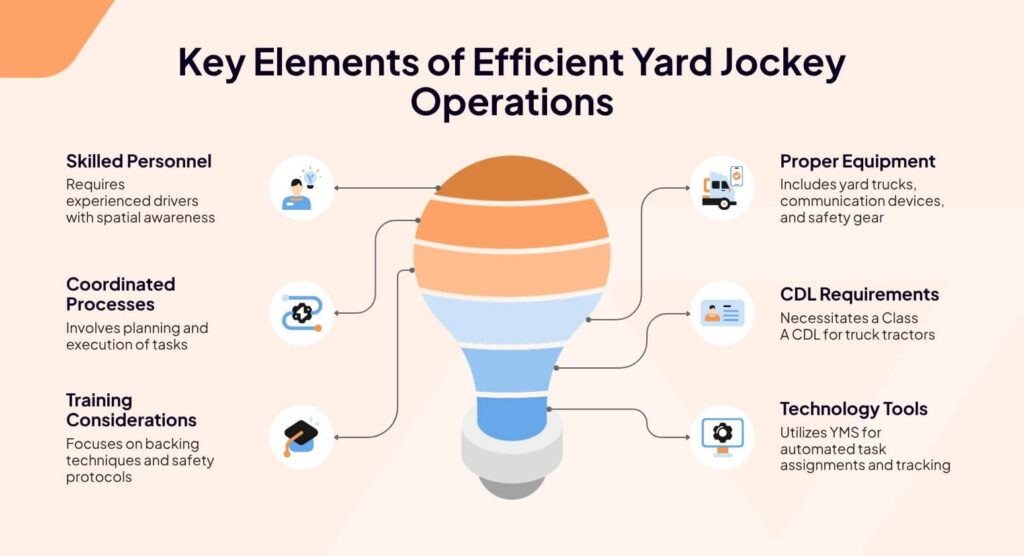
Building an effective yard jockey operation requires deliberate planning around three core elements: skilled personnel, proper equipment, and coordinated processes.
Essential Skills and Equipment Requirements
Yard jockeys need commercial driving experience and strong spatial awareness for maneuvering trailers in confined spaces. Physical demands include frequent equipment operation and coordination with dock workers across radio channels.
Essential equipment includes yard trucks or hostlers, communication devices, and safety gear, including high-visibility clothing and hard hats for reduced physical movement in active yard environments.
CDL Requirements and Training Considerations
Most yard jockeys have a Class A CDL for operating truck tractors with trailers and ensuring safety and competence. While a CDL is technically not required for operating equipment on private property, it is required to move trailers between facilities on public roads.
Your specific equipment, facility layout, and state regulations will determine specific licensing requirements.
Training focuses on backing techniques, spatial awareness, and facility safety protocols. Experienced drivers typically need minimal additional instruction beyond equipment familiarization.
Technology Tools
Yard management systems like Vector’s YMS transform spotters from clipboard carriers into decision makers. Yard jockeys receive automated task assignments through rules-based workflows that prioritize their next move.
Real-time tracking provides exact trailer locations without physical yard walks. Spotters make data-driven positioning decisions while reducing physical movement in yards for enhanced safety.
Technology Integration for Sophisticated Yard Management
Executive summary: Yard management flows work best when yard activity is connected to the rest of the logistics stack. Integration improves timing, visibility, and decision-making by turning trailer movement into live operational data.
Mature yard management demands real-time data flow between your yard activities and existing logistics systems. Without this connection, your team risks making decisions based on outdated information.
Technology integration eliminates manual coordination steps between yard activities and your TMS or WMS, enabling faster dock assignments and reducing driver detention time.
Connecting Yard Activities to Your TMS/WMS
Yard activities generate critical data that your TMS and WMS need for accurate planning and execution. When yard management systems connect via API to your existing logistics platforms, the need for manual data entry between systems is eliminated.
The integration ensures trailer status updates automatically trigger dock assignments and inventory movements. Your transportation team gains real-time data on facility capacity. Meanwhile, warehouse management teams receive advance notice of inbound freight priorities.
Real-Time Trailer Tracking
Vector’s approach provides real-time trailer location visibility through your yard jockeys’ existing workflow. When spotters take a photo of a trailer in its new position, that action automatically updates the tracking system.
This eliminates the need for RFID tags or additional proprietary hardware and provides you with continuous location data.
Automated Task Assignment and Workflow Optimization
Vector eliminates duplicate data entry by automatically triggering system updates when yard jockeys complete physical tasks. Taking a photo of a relocated trailer becomes the system update. This removes manual coordination steps while giving yard managers instant task completion updates.
Eliminate Manual Yard Tracking with Real-Time Visibility
Eliminating the need for repeated yard walks with real-time trailer visibility is one of the fastest ways to improve yard control.
Vector’s automated tracking solution eliminates the daily frustration of sending staff to walk yards multiple times while trailers remain unaccounted for between manual audits.
- Real-time trailer tracking provides location visibility using no additional proprietary hardware or RFID tags
- Digital yard audit capabilities have enabled customers to reduce physical validation from 4x daily to 1x daily for exceptions management only
- Automated task assignments for spotters through rules-based workflows eliminate manual coordination and reduce positioning delays
- SMS-based driver-office communication keeps drivers in trucks during operational updates while maintaining constant contact for safety
- Trailer pool monitoring with real-time availability analytics removes guesswork from yard management decisions and staging operations
Discover how Vector’s connected facility platform gives you continuous dock-to-yard transparency.
FAQs
What Does a Yard Jockey Do?
A yard jockey manages trailer positioning within facility yards, moving trailers between dock doors, staging areas, and parking spots. They coordinate with dock workers and drivers to maintain continuous trailer flow.
Their primary responsibility is eliminating positioning delays that create dock congestion. Yard jockeys serve as the critical link between transportation and warehouse operations.
Is it hard to be a yard jockey?
The difficulty of yard jockey work depends largely on your comfort with specialized equipment and spatial reasoning. Maneuvering trailers in tight spaces requires developed depth perception and understanding of turning radii.
The coordination aspect challenges many operators initially. You communicate constantly with dock supervisors about trailer priorities, warehouse teams about loading status, and drivers about pickup schedules. Missing these coordination points creates bottlenecks that ripple through the entire operation.
Yard jockeys work around moving trucks, pedestrians, and loading equipment in confined spaces. Checking blind spots, maintaining proper following distances, and coordinating with spotters becomes second nature but requires disciplined focus.
Most operators adapt well within 30-60 days of consistent practice. The learning curve steepens if you lack commercial driving experience.
How Many Hours Do Yard Jockeys Work?
Yard jockeys typically work standard facility operating hours, which range from 8-12-hour shifts depending on your facility’s requirements. Most positions follow predictable schedules tied to your facility’s peak activity periods.
Many distribution centers and manufacturing facilities operate multiple shifts to maintain continuous trailer flow.
First shift often starts between 6 and 8 AM to handle overnight carrier arrivals and prepare outbound loads for pickup. The second shift covers afternoon carrier windows and dock scheduling coordination. Some facilities add third shifts for 24-hour operations or specialized handling requirements.
The key is matching your yard jockey scheduling to actual movement demand rather than arbitrary coverage requirements.
Published on April 12, 2024
Last updated on May 19, 2026
Subscribe to stay updated on Vector and logistics trends
" " indicates required fields

Continue reading

Ready to transform your supply chain?
Increase efficiency and productivity. Say goodbye to delays, handwriting errors, and time-intensive manual data entry.