
How to Save Carrier Relations With Driver-Friendly Yard Operations
6 min read

Key takeaways
- Carrier rejection is rarely about rates alone; it’s often influenced by poor facility experience. Long wait times, unpredictable processes, and inefficient yards push carriers to prioritize other shippers, even at lower rates.
- Strong carrier relations are built through operational consistency and not negotiation tactics. Faster payments, better communication, and efficient yard execution directly influence carrier loyalty and capacity access.
- Most carrier friction originates inside the yard. Visibility gaps, manual workflows, and scheduling disconnects create delays that damage both costs and relationships.
- To improve carrier relations and become preferred partners in competitive freight markets, facilities may need to digitize workflows and reduce driver friction consistently.
When your preferred carrier is declining another load citing “excessive facility delays,” or demanding rate premiums to cover detention costs at your distribution centers, the rejection could be a sign of deep operational issues inside your facility.
What starts as operational friction could soon escalate into a capacity crisis: carriers might actively avoid your facilities, forcing you into spot market pricing when contract rates should suffice.
Breaking this pattern requires operational improvements that transform your facilities into driver-friendly destinations where carriers compete to haul your freight. Fixing yard inefficiencies and driver experience is key to restoring carrier trust and securing reliable capacity.
Ready to transform your supply chain?
Increase efficiency and productivity. Say goodbye to delays, handwriting errors, and time-intensive manual data entry.
What Are Carrier Relations and Why Are They Critical for Transportation Directors?
Executive summary: Carrier relations reflect how reliably and efficiently your facility operates. Strong relationships improve capacity access, stabilize rates, and ensure consistent service.
Carrier relations are the working relationship between shippers and carriers, shaped by day-to-day operations like on-time pickups, fast turnarounds, clear communication, and timely payments. They determine how willing carriers are to accept loads, prioritize your freight, and maintain service levels.
When operations run smoothly, carriers face fewer delays and predictable schedules, making your facility easier to work with. This leads to better capacity access, fewer service disruptions, and more stable pricing, especially during tight market conditions.
Strong carrier relationships create a competitive advantage, especially during capacity constraints when preferred shippers maintain access to quality carriers while others face service disruptions or premium pricing.
Transportation directors who prioritize relationship quality gain direct benefits through freight budget optimization and improved service level achievement. This represents a business imperative rather than operational best practice.
What Poor Carrier Relationships Could Cost Your Freight Budget
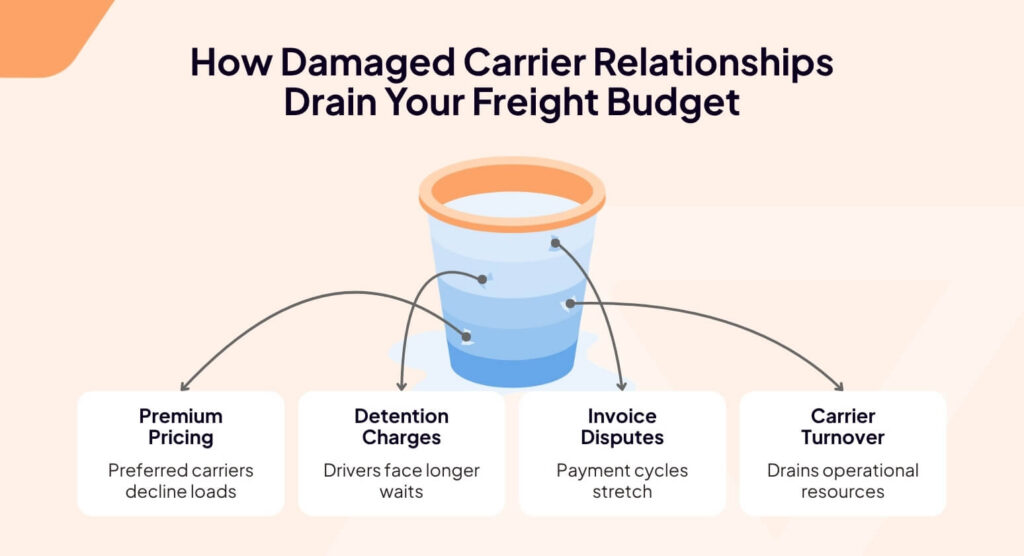
Damaged carrier relationships create a cascade of financial penalties that compound across your entire freight budget.
- Premium pricing replaces negotiated rates when preferred carriers decline loads.
- Detention charges multiply as frustrated drivers face longer waits at your facilities.
- Invoice disputes stretch payment cycles, while constant carrier turnover forces expensive rebidding and onboarding cycles that drain operational resources.
Leading transportation departments increasingly assign dedicated specialists to manage carrier relationships, recognizing that strong partnerships require focused attention beyond rate negotiations.
These specialists coordinate operational improvements, resolve service issues, and maintain the strategic relationships that ensure reliable capacity access.
How to Build Strong Carrier Relations
Executive summary: Improving carrier relations starts with fixing operational friction. Faster payments, better visibility, and smoother yard execution directly translate into stronger partnerships and lower costs.
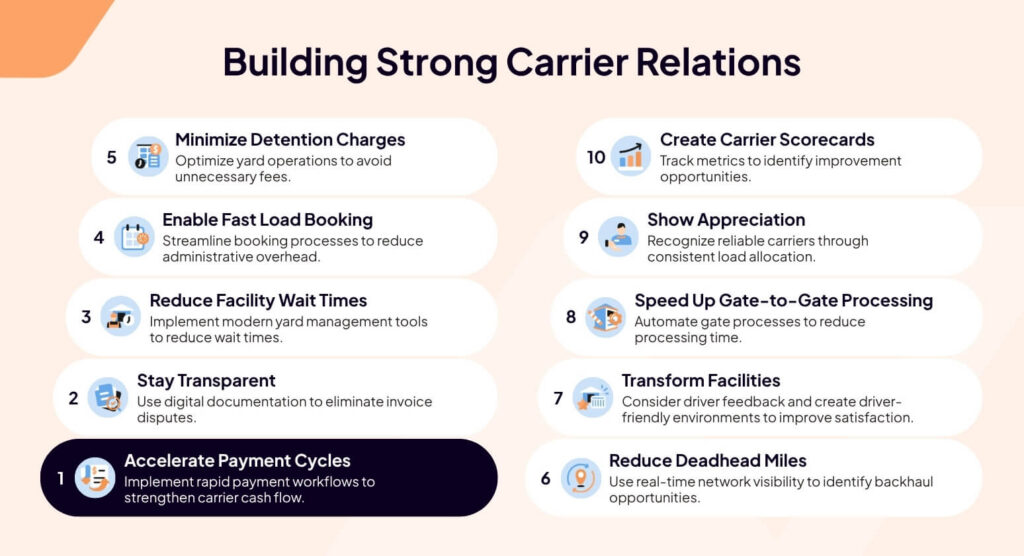
Building strong carrier relationships requires systematic operational improvements that directly address driver pain points.
Each enhancement creates measurable returns: faster payments reduce rate premiums, efficient yard operations eliminate detention charges, and streamlined processes earn preferential capacity access during market constraints.
Accelerate Payment Cycles
Fast payment cycles separate preferred shippers from the competition when carriers choose where to dedicate their best equipment and drivers.
While most shippers stretch invoice processing across weeks, leading transportation departments prioritize rapid payment workflows that strengthen carrier cash flow and demonstrate operational reliability.
This payment speed becomes a competitive differentiator during capacity constraints.
Stay Transparent To Eliminate Invoice Disputes
Invoice disputes drain resources and damage carrier relationships when documentation remains paper-based and prone to delays. Digital documentation strategies like Vector’s eBOL solution create timestamped, legally binding proof of delivery that eliminates weeks-long POD cycles.
Electronic bills of lading with digital signatures and geocoordinate stamps provide indisputable transaction records, reducing disputes from weeks to minutes.
Reduce Facility Wait Times
Smart transportation directors treat driver feedback as operational intelligence rather than complaints.
Drivers identify bottlenecks, gate inefficiencies, and communication gaps that facility managers can’t see from their offices. Regular feedback collection and rapid response to driver concerns eliminates wait time root causes while strengthening carrier relationships.
Enable Fast Load Booking and Real-Time Visibility
Streamlined load booking eliminates back-and-forth phone calls and email chains that consume carrier resources daily.
Real-time shipment visibility enables carriers to optimize driver schedules and communicate accurate ETAs to customers, reducing administrative overhead while improving service reliability.
Minimize Detention Charges
Yard congestion frequently leads to avoidable detention charges when trailers are stacked behind overwhelmed gates or when spotters are forced to manually search for available spaces. Without real-time yard visibility, facilities cannot optimize trailer flow or provide drivers with accurate dock assignments.
When carriers face these unpredictable delays, detention transitions from an occasional exception to a recurring budget line item. By digitizing yard workflows, facilities can eliminate the visibility gaps that damage both freight budgets and carrier trust.
Reduce Deadhead Miles and Empty Running
Carriers face significant cost pressure from empty miles between loads, cutting into already thin margins.
Modern logistics platforms enable multi-player collaboration across the entire supply chain, connecting shippers, carriers, and receivers to create visibility beyond facility walls. This expanded network visibility helps carriers identify backhaul opportunities and optimize routes more effectively than traditional single-facility systems.
Transform Your Facilities Into Driver-Friendly Destinations
Driver satisfaction directly impacts your Shipper of Choice status and capacity access. Modern facilities implement pre-check-in capabilities like Vector’s FastPass®, enabling SMS-based arrival notifications and automated gate processing.
These technologies eliminate long wait times while keeping drivers safely in their trucks during check-in procedures.
Driver-centric operations reduce detention charges and create positive carrier experiences that translate into preferential treatment during capacity crunches.
Speed Up Gate-to-Gate Processing
Modern automation platforms eliminate manual gate processes and paper-based workflows that create carrier bottlenecks.
Digital check-in systems, automated dock assignments, and real-time communication tools reduce facility processing time from hours to minutes, making your operation the carrier’s preferred destination.
Show Appreciation That Goes Beyond Rate Negotiations
Strong carrier relationships require genuine partnership recognition beyond contract terms. Recognizing reliable carriers through consistent load allocation, faster payments, and reduced wait times shows that their time and performance are valued.
Clear communication during delays, quick dispute resolution, and providing direct points of contact reduce friction and build trust. Involving key carriers in planning, such as sharing volume forecasts or peak schedules, helps them prepare capacity and improves coordination.
These practical actions signal long-term partnership, making carriers more likely to prioritize your loads, maintain service quality, and offer better terms over time.
Create Carrier Scorecards
Effective carrier scorecards track metrics for both parties, measuring carrier on-time performance alongside your facility’s loading efficiency and payment speed.
This dual accountability reveals improvement opportunities that strengthen partnerships through shared responsibility and continuous operational enhancement.
Leverage Technology to Scale Carrier Communications
Managing relationships with dozens or hundreds of carriers across multiple facilities requires automated communication workflows that maintain consistency without overwhelming your team.
Modern platforms enable standardized messaging, real-time status updates, and centralized relationship tracking that scales efficiently as your carrier network grows.
Create Standard Operating Procedures for Carrier Interactions
Standardized procedures ensure every carrier receives the same professional experience regardless of which team member they interact with.
Document communication protocols, escalation processes, and service standards to eliminate inconsistency that damages relationships.
How Vector Strengthens Carrier Relations Through Operational Excellence
Vector’s logistics workflow platform directly addresses the carrier relations challenges by eliminating the operational friction that damages these critical partnerships. The platform transforms how carriers experience your facilities through integrated capabilities that reduce wait times and streamline documentation:
- FastPass® digital check-in enables pre-check-in via SMS and eliminates long gate delays through automated processing
- Real-time ETA tracking and geofenced check-ins provide predictable dock assignments and reduce unexpected wait times
- SMS-based driver-office communication with automatic translation keeps drivers informed and in their trucks while facilitating seamless facility communication
- Instant eBOL processing with digital signatures and timestamps eliminates weeks-long POD delays that slow carrier invoice cycles
- Rules-based automated dock assignments reduce OTIF penalties and dwell time through optimized facility flow
Discover how Vector’s connected facility platform can help you become a preferred destination for carriers in today’s competitive freight market.
Increase efficiency and productivity. Say goodbye to delays, handwriting error and time-intensive manual data entry. 
Ready to transform your supply chain?
FAQs
How do carrier relations impact my total freight spend?
Strong carrier relationships directly reduce freight costs through lower accessorial charges, reduced detention fees, and preferential pricing during capacity constraints. Carriers reward reliable shippers with better service levels and rate stability.
What are the 4 types of carriers I should work with?
Diversify across asset-based carriers (own equipment), non-asset brokers (network access), regional specialists (local expertise), and national providers (broad coverage). This mix reduces dependency risks and maintains capacity options.
What KPIs should I track for carrier relationship health?
Monitor on-time performance, capacity acceptance rates, detention frequency, invoice dispute resolution time, and carrier satisfaction scores. These metrics reveal relationship strength and operational effectiveness.
How can I improve carrier relations without increasing rates?
Focus on operational efficiencies that lower a carrier’s cost-to-serve: faster payment cycles, reduced facility wait times, streamlined documentation, and consistent appointment scheduling. These improvements protect carrier margins, strengthen important partnerships, and increase your facility’s priority as a preferred destination.
What technology solutions help manage carrier relationships at scale?
Implement platforms that automate communications, provide real-time visibility, streamline documentation processes, and enable self-service capabilities. These tools maintain a consistent carrier experience across multiple facilities and partners.
Published on April 13, 2026
Last updated on May 19, 2026
Subscribe to stay updated on Vector and logistics trends
" " indicates required fields

Continue reading

Ready to transform your supply chain?
Increase efficiency and productivity. Say goodbye to delays, handwriting errors, and time-intensive manual data entry.