
How Modern 3PLs Can Separate Books in a Shared Multi-Tenant Yard
7 min read
Key takeaways
- Legacy yard systems were built for one company’s assets, so they were never designed to keep one client’s activity separate from another’s when several carriers or shippers share the same fenced lot.
- Separate books rest on two things: attributing every trailer, move, and document to the client that owns it, and controlling access with user roles.
- Vector tags activity to the scheduling client at check-in through Vector FastPass® and carries that attribution through every move, so the operator reports and bills per client without a shared spreadsheet.
- Vector’s roles (Member, Manager, Admin) control access, and a Member sees only their own documents. If you need each client limited to only their own trailers and moves, confirm that scoping when you evaluate a platform.
- Vector reports customers cut physical validation audits from multiple times daily to once daily, shifting the rest to exceptions-based management.
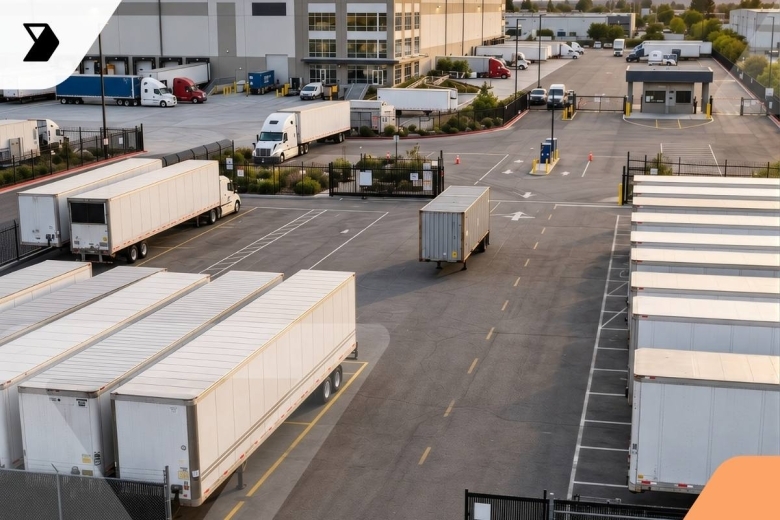
More 3PLs now host several carriers, shippers, or competing clients in one physical yard. That model raises a records problem the moment two clients share a lot. Their inbound volumes, dwell times, and moves have to stay cleanly separated for billing, reporting, and privacy, and those clients often compete.
Today, operators patch this with spreadsheets and staff who walk congested lanes to validate what’s parked where. The manual cost is real, and month-end reconciliation is worse.
Keeping separate books means attributing every trailer, move, and document to the client that owns it, controlling who sees what with roles, and pulling each client’s activity separately for billing and audit. In contrast, the operator keeps the full yard in view.

Ready to transform your supply chain?
Increase efficiency and productivity. Say goodbye to delays, handwriting errors, and time-intensive manual data entry.
This article explains how that separation works, and how to evaluate a platform for it.
What Separate Books Require in a Multi-Tenant Yard
Executive summary: Separation rests on three things working together: client attribution on every asset and move, role-based access that controls who sees what, and per-client reporting that the operator pulls without a shared spreadsheet.
Separate books do not mean a separate system for each client. They mean one yard where every trailer, move, and document is tied to the client it belongs to. Access also follows user roles, and the operator can report and bill per client from that attributed data.

Think of it as one yard with separate ledgers. Three carriers might drop pre-positioned trailers in the same fenced lot. Each carrier’s trailers, check-ins, and records carry that carrier’s tag, so the operator can pull one carrier’s activity without untangling it from the others.
Here is how the pieces fit.
Client Attribution and Role-Based Access
Attribution decides whose activity is whose. When a trailer checks in, it gets tied to the carrier, shipper, or 3PL client that scheduled the move, and that tag travels with every move and document after it. That is what lets you bill one client for the work done on their trailers and nothing else.
Access runs on roles. In the right yard management system, a Member sees only their own documents, while a Manager or Admin sees the full yard. That gives the operator control over who sees what at the user level, and it keeps a driver’s or member’s records from spilling to everyone.
Full separation of one client’s view from another’s is a stronger requirement, and it is worth being precise about. If your operation needs each client limited to only their own trailers and moves inside one portal, treat that as a spec to confirm with any platform rather than an assumption.
Real-Time Trailer Tracking Without Added RFID Infrastructure
Separation only works if the underlying trailer data is accurate. A yard can track trailers two ways: with fixed RFID readers and a tag on every asset, or from the events staff already generate at check-in and on each move.
The second approach reads location from a driver checking in and a spotter photographing a trailer in its new spot, so the map stays current without wiring the whole site.
That matters more in a shared yard, because the trailers belong to different owners. Trailer pools of pre-positioned equipment need to stay sorted by owner, so each carrier’s units are tracked and countable on their own.
Event-based tracking keeps that owner tag attached without asking anyone to bolt hardware onto trailers that leave next week.
Rules-Based Task Assignment by Client or Contract
Once every trailer carries its owner tag, the yard work follows the same lines. Rules assign the next move to the nearest yard spotter, and each move stays attributed to the client it was performed for, from assignment through completion.
That attribution is what feeds clean billing. A move for one client stays tied to that client, so the charge lands on the right account. Digital documents close the loop. Each transaction carries a timestamped record, so you reconcile activity per client instead of rebuilding it from a shared spreadsheet at month-end.
The three pieces run as one system. Attribution ties activity to the owner, accurate tracking keeps the yard honest, and scoped task rules keep every move on the right account. One yard runs many ledgers, and each client’s activity stays separately reportable.
How Vector YMS Keeps a Shared Yard’s Books Separate
Executive summary: Vector attributes activity to the client at check-in and preserves that tag through RFID-free tracking and timestamped records, so the operator reports and bills per client while keeping the full yard in view.
Separate books hold up only when each mechanism ties activity to the right client from the first touch at the gate. Vector does this at three points: check-in, trailer tracking, and the record. Each one keeps activity attributed while the operator keeps the full yard in view.
Vector ties activity to the client at check-in and carries the tag through tracking and records
Client-Attributed Check-In With FastPass®
Every driver who arrives gets tied to a client the moment they check in. Vector FastPass® handles check-in by SMS, app, or kiosk, and each one ties back to the carrier, shipper, or 3PL client that scheduled the move.
The tenant’s driver sees only their own documents through the Member role, and the operator sees every arrival for gate control and billing. When check-in is client-aware, your per-client billing and access logs build themselves as trucks roll through, instead of someone matching a gate log against a spreadsheet at month-end.
Per-Client Trailer Pool Tracking and Exception-Based Audits
When several carriers park trailers in the same yard, the pool gets muddy fast. Vector’s YMS monitors pre-positioned trailers left by carriers with real-time availability analytics, keeping every asset tagged to its owner so the operator can allocate space across all of them.
Real-time trailer tracking runs without RFID tags or added hardware, so nobody bolts equipment onto trailers that leave next week. Vector reports customers reduced physical validation audits from multiple times daily to once daily, moving to exceptions-based management.
This way, staff work the flagged detention and dwell problems instead of counting trailers by hand.
Per-Client Records and Role-Based Access
Each transaction carries its own record. Vector’s eBOL combines AI imaging, electronic signatures, timestamps, and geocoordinate stamps into a complete digital audit trail for every move. Also, AI Imaging Agents verify document authenticity and detect POD manipulation so the proof holds up when an auditor asks.
Because each record ties to one client, you export one client’s activity for billing or compliance without touching another’s. Access follows the Member, Manager, and Admin roles, so you decide who sees what. Yard analytics let the operator read activity by client across the whole yard.
Keep Every Client’s Books Separate While Sharing One Yard
Running a multi-tenant yard means balancing shared physical space against the hard requirement to keep each client’s shipments, trailers, and records cleanly separated. Vector brings real-time control and clean attribution to shared operations, so each client’s activity stays on its own account while the yard runs as one coordinated system:
- Client-Attributed Tracking: Vector’s YMS gives continuous visibility into trailer locations across the yard without RFID tags or costly hardware, with every asset tagged to the client that owns it.
- Complete Digital Audit Trail: eBOL captures electronic signatures, timestamps, and geocoordinate stamps on every transaction, creating a defensible record that keeps each client’s books clean and separate.
- Multi-Player Collaboration Model: Vector connects suppliers, carriers, and customers from appointment scheduling through delivery, building a chain of custody from the start rather than managing only what happens inside the fence.
- Rules-Based Task Assignment: Automated spotter and yard staff assignments route work through in-cab tablets and mobile devices, keeping every move on the right client’s account.
- Connected System Integration: Yard activity and eBOL data flow into existing WMS, TMS, and ERP platforms like SAP, Oracle, Manhattan Associates, and Blue Yonder via API, EDI, and email, so each client’s records feed the systems you bill from.
See how Vector runs the yard and how it fits your operation if shared yards and separate books are the balance you are looking for,
FAQs
What Is the Difference Between Separate Books and Standard YMS Visibility?
Standard yard visibility assumes one company owns everything in the fence, so access is built around a single operation. The moment several carriers or shippers share the yard, you need each client’s trailers, moves, and documents attributed and reportable on their own. Separate books do that through client attribution and role-based access, so the operator bills and audits per client while keeping the full cross-yard view for gate control and space allocation.
Do Multi-Tenant Yards Need RFID or Extra Hardware?
No. A yard can read trailer location from check-in and move events instead of fixed readers and tags, so tracking runs in software. Vector provides real-time trailer tracking that eliminates the need for RFID tags or costly hardware. You skip the cost of laying new infrastructure across a yard that already hosts several clients.
Can This Integrate With Each Client’s Existing WMS or TMS?
Yes. Vector’s YMS connects to existing WMS, TMS, ERP, and YMS platforms that collect yard truck data. It receives inbound shipment data and dock status, coordinates yard truck assignments, and pushes yard truck activity back into the WMS. Each client’s systems stay wired to their own slice of yard activity, so their data feeds their books and no one else’s.
Is This Suitable for Port or Rail-Adjacent Yards?
Standard facility yards fit well. Direct port operations have specialized YMS requirements that differ from standard facility operations, so treat those as a separate case. For yards near ports and rail ramps, Vector provides congestion alerts across ports, rail ramps, and transit routes to support proactive planning, so you can schedule around delays before trailers pile up at the gate.
Published on September 17, 2026
Last updated on September 17, 2026
Subscribe to stay updated on Vector and logistics trends
" " indicates required fields

Continue reading

Ready to transform your supply chain?
Increase efficiency and productivity. Say goodbye to delays, handwriting errors, and time-intensive manual data entry.