
What Is Trailer Pool Management and How Does It Lower Detention Costs?
5 min read
Key takeaways
- Trailer pools improve throughput and reduce detention by enabling drop-and-hook operations. To make this work, facilities must know exactly where trailers are, which ones are loaded, and which are ready for dispatch at a given moment.
- When teams rely on manual audits to locate trailers or verify status, the data is often outdated. This breaks the trailer pool execution and leads to missed trailer availability, unnecessary moves, scheduling conflicts, and delays that directly increase detention costs.
- Modern yard management systems provide real-time visibility for accurate trailer tracking, improving coordination across yard and dock operations. With YMS, teams can locate trailers instantly, align dock assignments with actual yard status, and reduce unnecessary trailer moves.
- Digital trailer pool systems can also enhance safety, reduce labor costs, and provide audit-ready documentation for compliance and disputes.
In many facilities, trailer pool management breaks down because teams lack real-time visibility into trailer status.
Without accurate information on where trailers are and whether they’re ready, drop-and-hook operations stall, creating unnecessary moves, scheduling conflicts, and rising detention costs.
Automated yard technology eliminates the guessing game in trailer pool management by providing logistics directors with real-time trailer pool accuracy that enables confident facility scheduling and consistent service levels.
Ready to transform your supply chain?
Increase efficiency and productivity. Say goodbye to delays, handwriting errors, and time-intensive manual data entry.
What Is a Trailer Pool?
Executive summary: Trailer pools are pre-positioned trailer systems that improve efficiency and flexibility. They enable continuous throughput and reduce operational bottlenecks through strategic positioning.
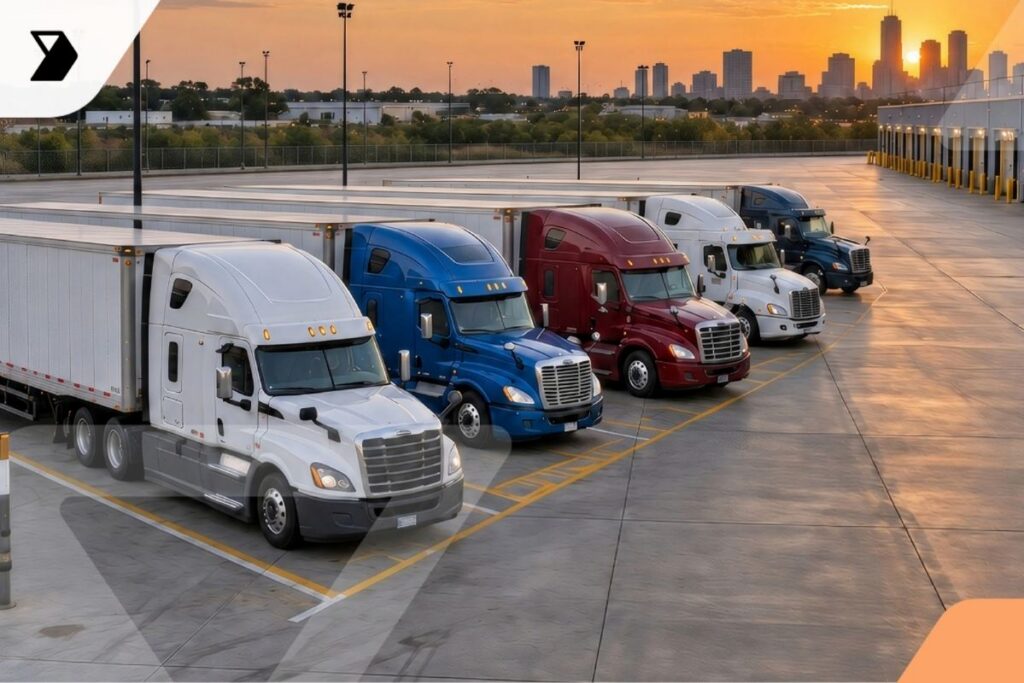
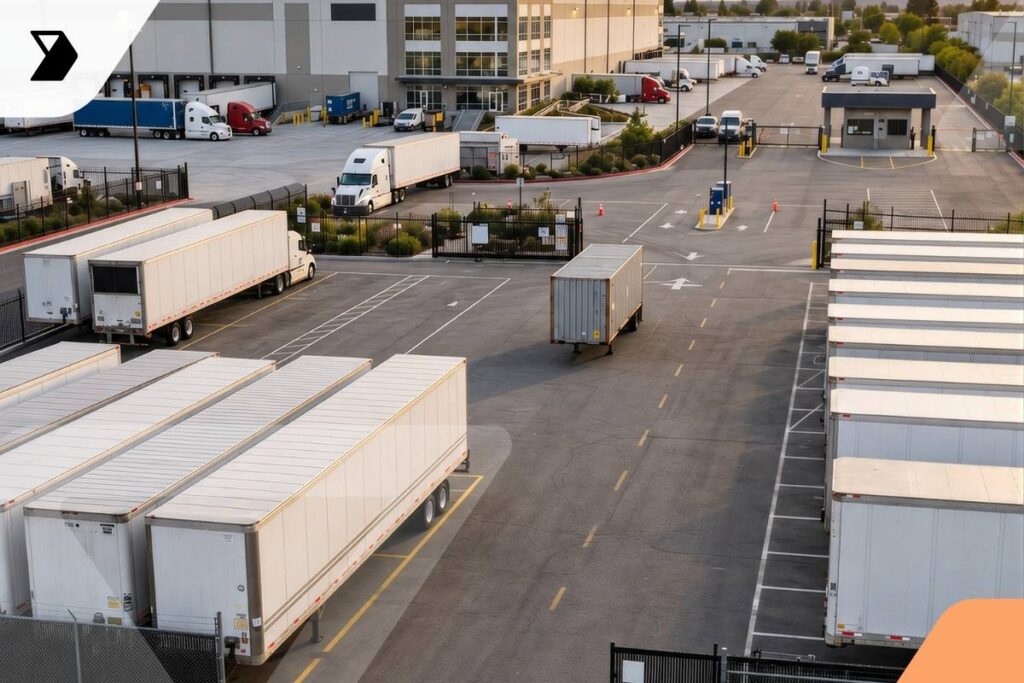
A trailer pool is a strategic logistics system where pre-positioned trailers are stored at facilities to enable efficient cargo operations and maintain continuous throughput. These pools come in three primary configurations:
- Dedicated pools serve single customers with guaranteed capacity
- Shared pools distribute trailers across multiple users for cost efficiency
- Drop-and-hook pools allow carriers to quickly exchange trailers without waiting for loading or unloading.
These methods of positioning directly impact yard capacity utilization. If executed effectively, they can provide operational flexibility and prevent bottlenecks during peak shipping periods.
Necessary Elements for Effective Trailer Pool Management
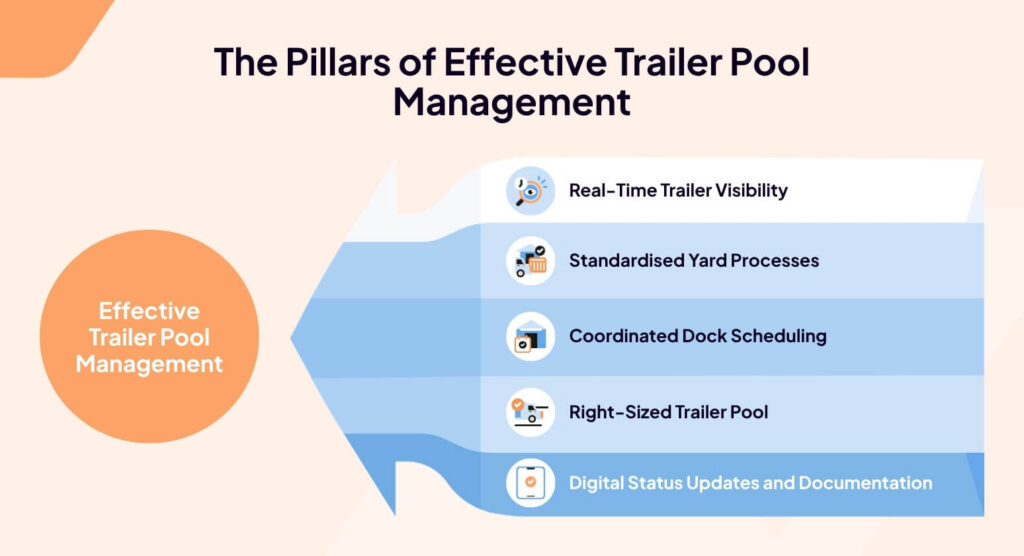
Trailer pools deliver value only when supported by accurate tracking, coordinated scheduling, and disciplined execution. Without the following elements, pools could quickly become disorganised and lose efficiency.
- Real-time trailer visibility: Know the exact location, load status, and readiness of every trailer to avoid missed availability and unnecessary moves
- Standardised yard processes: Define consistent workflows for check-in, parking, dock assignment, and departure to keep trailers moving predictably
- Coordinated dock scheduling: Align dock assignments with actual yard status to prevent congestion and idle trailers
- Right-sized trailer pool: Balance trailer availability with volume and turnaround times to avoid shortages or excess idle assets
- Digital status updates and documentation: Ensure all stakeholders have accurate, timely information on trailer readiness, exceptions, and movements
Key Benefits of Digitizing Trailer Pool Management
Executive summary: Digital yard management replaces manual audits with real-time visibility. This shift improves accuracy, reduces labor, and enables proactive operational control.
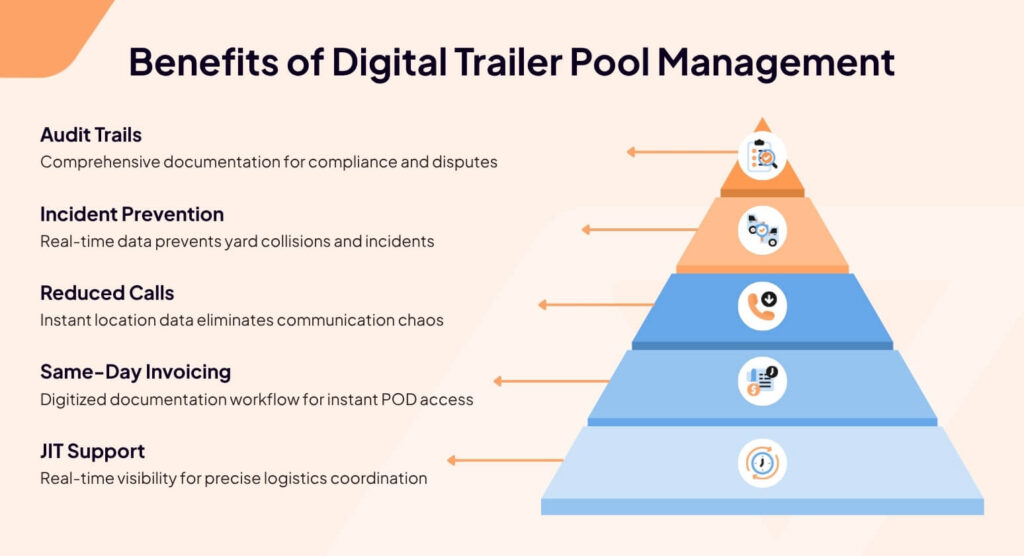
The shift from paper-based yard tracking to digital yard management systems represents an operational evolution that leading facilities are embracing to remain competitive.
Support for JIT Operations
Just-in-time logistics operations demand precise coordination between inbound materials and production schedules, where even small timing variations can trigger costly line shutdowns. Real-time trailer pool visibility addresses this challenge by providing manufacturing teams with accurate scheduled dock arrivals, real-time on-time status, and instant alerts on delays for all yard assets.
When logistics directors can confirm exact trailer locations and estimated processing times, production planners gain the reliability needed to coordinate labor schedules, equipment allocation, and material flow without safety stock buffers.
Same-Day Invoice Processing
Digital trailer pool systems are extending beyond physical asset tracking to digitize the entire documentation workflow. Companies like Vector demonstrate this evolution through eBOL capabilities that facilitate quick POD access, transforming invoice processing from weeks to minutes.
Leading facilities now connect trailer movements directly to automated document capture and processing systems, eliminating the traditional bottleneck in which directors of transportation wait weeks for drivers to return proof-of-delivery documents.
Reduced “Where’s My Trailer” Calls
Transportation teams lose hours daily fielding location inquiries from operations managers, customers, and carrier dispatchers who can’t locate specific trailers in the yard. Real-time trailer visibility eliminates this communication chaos by providing instant location data accessible to all stakeholders.
Operations staff can answer customer inquiries immediately without radio calls to yard personnel, while carrier dispatchers can confirm trailer positions for pickup scheduling without lengthy phone conversations that disrupt daily workflow.
Preventing Yard Incidents
Real-time trailer location data eliminates dangerous guesswork in yard operations. When spotters know exactly where equipment is positioned and yard staff can coordinate movements through digital communication, vehicle collisions and pedestrian incidents decrease significantly.
Digital visibility replaces manual yard walks, preventing the safety risks of drivers or staff searching for equipment on foot through congested high-traffic zones.
Audit Trails for Compliance and Dispute Resolution
Digital trailer pool systems create comprehensive documentation trails that capture every movement, timestamp, and transaction automatically.
Electronic record-keeping supports regulatory compliance audits while providing definitive evidence for carrier disputes, detention claims, and internal accountability requirements that manual yard tracking simply cannot deliver.
Implementation Challenges When Navigating Trailer Pool Setup
Executive summary: Implementing trailer pools requires careful planning around capacity, integration, and change management. Successful adoption balances operational needs with minimal disruption.
Setting up trailer pool systems requires careful planning around capacity ratios, system integrations, and workforce transitions. Success depends on balancing operational requirements with existing infrastructure while minimizing disruption to daily operations through phased implementation approaches.
Integration with WMS/TMS Systems
The trailer pool system needs to integrate seamlessly with existing WMS and TMS platforms through standard APIs and data connectors, eliminating the need for costly system replacements.
The key consideration is establishing a consistent data flow between yard operations and warehouse management: ensuring trailer movements, dock assignments, and inventory status sync automatically across systems.
The integration should maintain existing workflows while adding supply chain visibility layers that enhance rather than disrupt current operations.
Change Management and Stakeholder Involvement
The most successful trailer pool implementations use a “digital-analog bridge” approach that accommodates different stakeholder preferences.
By utilizing mobile document scanning or gate-in kiosks, drivers can maintain familiar paper-based workflows while the system uses OCR to instantly digitize and create digital twins of all transactions in the background.
This philosophy recognizes that effective systems work with existing behaviors rather than forcing disruptive operational changes, ensuring smooth adoption across diverse teams while providing the real-time data needed to lower detention costs.
This philosophy recognizes that effective systems work with existing behaviors rather than forcing complete operational changes, ensuring smooth adoption across diverse teams and reducing implementation resistance.
Strengthen Trailer Pool Management with Real-Time Visibility
Vector’s YMS platform can eliminate the guesswork from your trailer pool operations and deliver the real-time intelligence your logistics team needs to optimize facility performance.
- Real-time trailer tracking, which leverages the mobile devices your team already uses, eliminates the need for costly proprietary hardware and provides instant location visibility.
- Automated dock assignments with parking status visibility provide instant knowledge of which trailers are available and where, enabling better scheduling coordination
- Trailer pool monitoring with real-time availability analytics prevents appointment rejections and improves customer service levels
- Digital yard audits reduce manual yard walks from 4x daily to 1x daily while improving accuracy and freeing staff for higher-value tasks
- Rules-based automated task assignments for spotters and yard staff ensure trailer movements are tracked and updated automatically without manual data entry
See how Vector transforms your trailer pool management with real-time visibility, fewer manual audits, and consistently lower detention costs.
FAQs
What Is a Trailer Pool?
A trailer pool is a strategic logistics system where pre-positioned trailers are stored at facilities to enable efficient drop-and-hook operations, reducing driver wait times and improving facility throughput.
What Is a Drop Trailer Pool?
A drop trailer pool specifically refers to a system where carriers drop loaded or empty trailers at designated locations for later pickup, eliminating the need for drivers to wait during loading or unloading operations.
How Do Trailer Pools Reduce Detention Costs?
Trailer pools eliminate detention charges by providing pre-positioned trailers that allow drivers to complete drop-and-hook operations quickly, avoiding the time-based fees that occur when drivers wait for loading or unloading activities.
What’s the Difference Between Dedicated and Shared Trailer Pools?
Dedicated trailer pools serve specific customers or routes exclusively, while shared trailer pools accommodate multiple carriers and customers, maximizing asset utilization across different operational requirements and schedules.
Published on April 22, 2026
Last updated on May 19, 2026
Subscribe to stay updated on Vector and logistics trends
" " indicates required fields

Continue reading

Ready to transform your supply chain?
Increase efficiency and productivity. Say goodbye to delays, handwriting errors, and time-intensive manual data entry.