
Why Inland Container Depots Lose Control When Volumes Surge Inland
7 min read
Key takeaways
- An inland container depot needs the container number, the chassis under it, and where each unit sits, a level of detail a standard trailer yard tracking trailers by carrier never captures.
- Vector tracks container and chassis location without RFID tags or gate hardware, updating the record when a spotter photographs a unit in its new spot and uploads it, which triggers the system update automatically.
- Timestamped gate-in and dwell records let a depot substantiate storage charges and defend demurrage disputes with dated digital evidence instead of a driver’s word, and cut billing cycles from weeks to hours.
- Depots that keep container counts clean stay a reliable buffer in the port and drayage network, while depots whose counts prove wrong lose trust and watch carriers route around them.
When import volumes spike, containers can pile up faster than the port can clear them, and inland container depots become the release valve. A depot that can tell a carrier which box sits where, and how long it has been there, keeps freight moving. One that is guessing loses the count, then the billing, then the carrier.
The catch is that a depot yard runs on detail a standard trailer yard never tracks: the container number, the chassis under it, and where each unit sits. Capture that cleanly, and you can bill storage on evidence, settle interchange questions fast, and stay the buffer the network leans on.
This guide covers what an inland container depot does, how in-yard visibility ties to correct billing and demurrage defense, and how to set up container-level tracking without an RFID buildout.

Ready to transform your supply chain?
Increase efficiency and productivity. Say goodbye to delays, handwriting errors, and time-intensive manual data entry.
What Is an Inland Container Depot (ICD)?
Executive summary: An inland container depot operates away from the marine terminal to receive, store, stage, and pair containers with chassis, relieving pressure on congested port facilities.
An inland container depot is an off-port facility that receives, stores, and stages shipping containers before and after they move through a marine terminal. It handles empty returns, pairs containers with chassis, and holds loaded boxes until drayage carriers pick them up or the port calls them forward. Think of it as an inland relief valve for the port.
The site sits away from the port face, so it takes pressure off congested terminals when volumes climb.
How an ICD Differs From a Port Terminal and a Standard Yard

A marine terminal sits at the quayside and loads containers straight onto and off vessels. It runs on systems built for ship-side work, and those systems look nothing like what a standard facility runs on. An ICD never touches a vessel. It sits inland and moves containers by truck and rail, so it needs inland-yard visibility, not a marine terminal operating system.
A container freight station does something else again. It strips and stuffs cargo, breaking loads down or building them up at the box level. An ICD keeps containers intact and handles storage, staging, and handoff.
A standard trailer yard is the comparison people reach for. Most trailer yards track trailers by carrier and dock assignment. An ICD needs the container number, the chassis paired with it, and where each unit sits. That level of detail is what a depot yard runs on.
The Commercial Role (Buffer in the Port and Drayage Network)
The depot earns its keep by being a dependable buffer between the port and the drayage carriers who serve it. When a surge hits, the port needs somewhere to send containers fast, and carriers need a predictable place to grab or drop them.
This role holds up only when the depot can prove three things cold: what it received, where each box sits right now, and how long it dwelled. Container status you can trust, gate throughput records, and dwell time stamps are what let the depot bill storage correctly and hold its ground when a customer disputes a charge.
When those records are clean, the depot stays a node the whole network relies on. When they aren’t, every disputed invoice chips away at that trust, and the carriers start routing around you.
How Yard Visibility Ties to Correct Billing and Demurrage Defense
Executive summary: Accurate container timestamps and continuous dwell tracking turn disputed storage charges into defensible invoices, preventing thousands in lost demurrage revenue.
The container data that keeps trucks moving also decides whether the depot bills correctly. Your charges hold up when the records behind them are clean, and they fall apart when they aren’t. Three scenarios show how in-yard data turns into defensible invoices and settled disputes.
Timestamped Dwell Records That Substantiate Storage Charges
Containers overstay their free time, and nobody catches it until the customer questions the bill. That’s your storage revenue walking out the gate. A container sitting in the yard for days should generate a charge, but you only collect it if you can show exactly when the unit arrived and how long it stayed.
Continuous dwell monitoring is how you prove it. Modern YMS like Vector track each container’s location and timing without RFID tags or costly hardware, so the clock starts the moment a unit gates in.
When a customer disputes a storage line, you pull the timestamped dwell record rather than reconstructing dates from paper logs. You bill on evidence, and the digital documentation cuts billing cycles from weeks to hours.
Chassis Records That Settle Interchange Disputes
A carrier’s invoice says one chassis. Your records can’t confirm which chassis left with which container. Without proof, your depot eats the charge or your team burns an afternoon arguing over an interchange nobody can reconstruct.
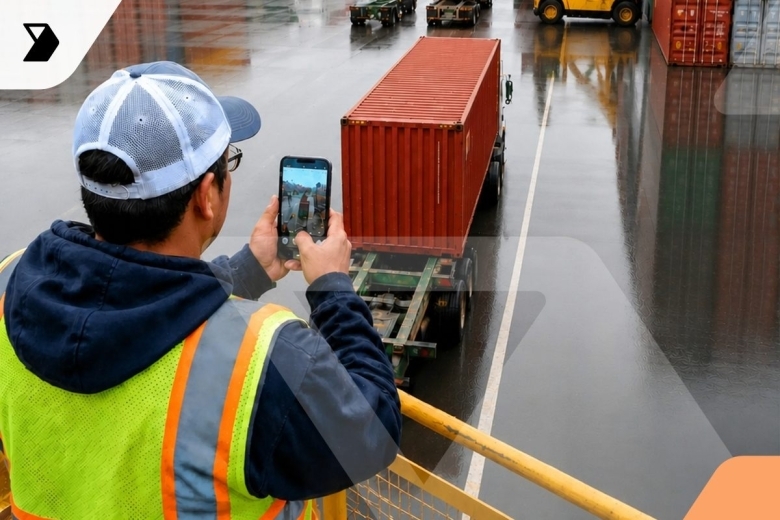
Vector builds “definition of done” directly into workflows. When a spotter takes a picture of a container in its new location and uploads it, that upload becomes the trigger for the system update.
No one keys in a second record, and data entry errors that scramble a chassis or container number drop out. The record captures the container, the chassis, and the move together.
When a carrier’s per diem or interchange bill lands, you match it against that record and settle it. The teams that get this right stop treating interchange charges as a cost of doing business and start treating them as line items they can verify. Fewer disputes ever reach a phone call.
Gate Throughput Data That Supports the Depot as a Reliable Buffer
During a surge, the gate backs up, and the numbers get soft. Drivers sit, and everyone downstream is guessing whether the depot has room for more. The buffer only works when the partners feeding it believe the counts.
Digital gate-in and gate-out records are how you earn that trust. Vector FastPass® handles driver check-in through SMS, app, or kiosk, and every timestamp lands in the same system that tracks the yard.
That gives you throughput data you can hand to a drayage partner or a shipper, so they plan against your real staging capacity instead of a phone call and a hunch. Sound gate management closes the visibility gaps that make partners nervous during a surge.
A depot that keeps its counts clean stays a reliable node when volume climbs. When the counts prove wrong, partners route around it.
Setting Up Port-Grade Visibility at Your Inland Depot
Executive summary: Container-level visibility requires only a readiness check covering mobile check-in and RFID-free tracking, not an RFID buildout or lengthy IT project.
Getting container-level visibility into your yard doesn’t take an RFID buildout or a six-month IT project. It starts with a short readiness check. Before you evaluate any system, confirm your depot can support the pieces that make container tracking work in the yard.
Run through this checklist as you plan:
- Mobile-First Check-In: Drivers check in by SMS, app, or kiosk without downloading anything. Vector FastPass® supports pre-arrival check-in across unmanned gates, guard-assisted lanes, and self-service kiosks. Confirm your gate can run those lanes so trucks don’t stack up waiting on a guard booth.
- Tracking Without New Hardware: Container and chassis location updates from a photo upload or a spotter’s tablet, not from RFID tags you buy and maintain. Vector’s YMS gives you real-time tracking with no RFID and no gate hardware to install, which means you’re not budgeting for a tag program that has to be replaced every time one falls off a chassis.
- Offline Capability: Gate and yard workflows keep running when connectivity drops. Vector’s platform queues the digital package and syncs once the network returns, so a photographed gate-in at a dead-zone corner of the yard still lands in the record. If your current process loses a scan the moment WiFi cuts out, that’s what you’re fixing here.
- System Connections: Your yard data flows into the systems you already run. Vector connects to your WMS, TMS, or ERP via API, EDI, or email. Confirm those connections up front so container status doesn’t sit trapped in a yard tool that nobody in the office can see.
Once those foundations are set, map each depot task to the tool that handles it. Vector FastPass® covers driver check-in and gate throughput, so trucks clear the gate instead of idling in a line. The YMS handles container-number capture, chassis tracking, and unit location through tablets in the cab, with real-time tracking that skips RFID entirely.
Start with one gate and one yard zone. Prove the check-in and location flow there, then expand across the depot. As volumes surge inland, you’ll already have the container status and dwell records to keep pickups moving and bill accurately, and you’ll avoid the detention charges that pile up when trucks wait.
Turn Your Inland Depot Into a Container Visibility Hub With Vector
Running an inland container depot without real-time visibility means chasing paper, guessing at container locations, and reconciling audits that never quite match. Vector closes that gap by giving your yard continuous, structured container visibility, without adding hardware or forcing drivers into unfamiliar workflows:
- RFID-Free Asset Tracking: Vector’s YMS delivers continuous, real-time visibility into every trailer and container location while eliminating the need for RFID tags or costly infrastructure.
- Photo-Triggered Updates: When a spotter photographs a container in its new spot and uploads it, that image automatically triggers system updates, removing manual data entry and duplicate documentation.
- FastPass® Driver Check-In: Drivers pre-check-in via SMS, app, or kiosk across unmanned gates, guard-assisted lanes, and self-service modes, with geofenced check-ins and real-time ETA tracking.
- Digital Yard Audits: Customers have reduced physical validation audits from multiple times daily to once daily for exceptions management, shifting teams from constant reconciliation to targeted review.
- Multi-Player Chain of Custody: Vector connects suppliers, carriers, and customers from appointment scheduling through delivery, building a complete chain of custody rather than isolating visibility inside the fence.
See how Vector runs the yard, from container check-in through dwell records and billing, without an RFID buildout.
Frequently Asked Questions
Do You Need RFID Tags or Special Hardware to Track Containers in the Yard?
No. Vector’s YMS gives you real-time tracking that keeps continuous visibility into container and trailer locations and cuts out the need for RFID tags or costly hardware. The location data comes straight from the yard. When a spotter photographs a container in its new spot and uploads it, that upload triggers the system update. Vector builds a definition of done directly into the workflow, so the position isn’t logged until someone confirms the move. You get current unit locations without buying and mounting RFID readers across the yard.
Can Yard Visibility Systems Work Without Reliable Internet at a Remote Depot?
Yes, within limits, and this is the first question you should ask any vendor pitching you a yard system. A depot 40 miles from the nearest fiber line drops its connection more than the vendor’s demo suggests, and a system that stops working the moment the signal does is worse than paper. Vector’s platform functions offline by queuing digital packages until connectivity returns. Gate and documentation work keep moving during a connection drop, then syncs once the depot reconnects.
Published on September 17, 2026
Last updated on September 17, 2026
Subscribe to stay updated on Vector and logistics trends
" " indicates required fields

Continue reading

Ready to transform your supply chain?
Increase efficiency and productivity. Say goodbye to delays, handwriting errors, and time-intensive manual data entry.