
Gate Management Models: From Guard Stations to Fully Autonomous Operations
8 min read
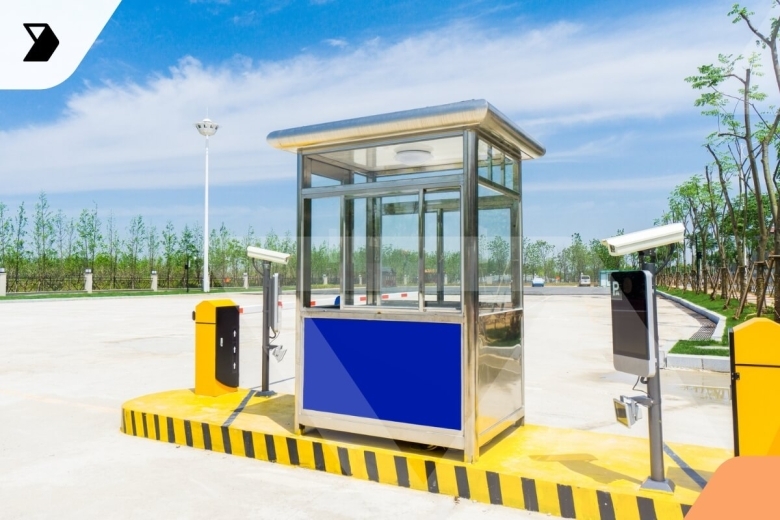
Key takeaways
- Traditional yard gate management causes 30-60 minute driver wait times and requires 3-4 shifts for 24/7 coverage, with guards spending the majority of their time on data entry and transcription rather than security — turning gate labor into an expensive clerical function.
- The real cost of manual yard gate operations extends beyond guard labor into delayed proof of delivery documents that block invoicing for days or weeks, manual data entry errors that cascade downstream, and driver dissatisfaction that undermines shipper-of-choice positioning.
- Facilities evaluating gate automation often stall because they frame it as an all-or-nothing decision between keeping guards and going fully autonomous, when hybrid models like guard-assisted digital systems and unmanned kiosks offer intermediate steps that reduce costs while preserving human oversight for exceptions.
- A platform-based approach that supports all four gate models — from guard-assisted tablets to fully autonomous geofenced check-ins — lets facilities match automation to their current volume, security requirements, and risk tolerance, then progressively scale without replatforming.
You’re evaluating gate automation proposals—vendors pitching guard-assisted tablets, self-service kiosks, and fully autonomous systems—but lack a clear framework to compare them objectively.
Yard gate management models exist on a spectrum from traditional manual operations to fully digital automation, each with distinct cost structures and operational implications. This analysis examines four yard gate management approaches: traditional guard stations, guard-assisted digital systems, hybrid unmanned gates, and fully autonomous guardless operations.
We’ll assess costs, driver experience impact, security considerations, and implementation scenarios to help Directors of Transportation and Directors of Logistics make informed gate automation decisions based on facility volume, operational priorities, and risk tolerance.

Ready to transform your supply chain?
Increase efficiency and productivity. Say goodbye to delays, handwriting errors, and time-intensive manual data entry.
Yard Gate Management Model #1: Traditional Guard Stations
Exec summary: Guards manually process every vehicle with paper logs and radio calls, driving 30-60 minute wait times and consuming most of their labor on data entry rather than security.
Traditional guard stations represent the operational reality most facilities currently run—the baseline system that evolved from decades of manual processes. These operations require guards physically stationed at entry and exit points with 24/7 coverage, typically requiring three to four shifts to maintain around-the-clock operations.
Guards manually record information on clipboards or paper logs, visually verify driver credentials and trailer seals, and communicate with warehouse teams via radio or phone calls.
The cost structure centers heavily on labor. Guards spend the majority of their time on data entry and transcription rather than security or exception handling. Coverage gaps emerge during breaks, shift changes, and sick days, requiring backup staffing to maintain operations.
What Happens if a Guard Calls in Sick?
In a traditional guard-station model, a single sick call exposes how fragile gate coverage really is. Maintaining 24/7 operations already requires three to four shifts, so an unplanned absence forces a scramble for backup staffing, overtime, or temporary coverage, which can lengthen driver queues and stall check-in entirely. The deeper problem is that the gate’s throughput depends on one person being physically present. Digital and unmanned models remove that dependency. With self-service kiosks, SMS pre-check-in, or fully autonomous geofenced check-in, drivers continue to process and receive dock assignments even when no one is at the gate, while remote staff monitor a dashboard and step in only for exceptions. Continuity stops being a staffing question and becomes a system capability.
The manual documentation needs built into this model create significant friction points. Drivers hand paper BOLs through guard shack windows, and guards transcribe information by hand—often with errors due to handwriting, lighting conditions, or language barriers.
Documents move physically from gate to receiving office, where data gets manually entered into WMS systems later, creating lag time. Proof of delivery documents don’t return for days or weeks, blocking invoice processing.

As a result, wait times stretch 30-60 minutes at congested facilities as drivers queue while guards manually process each vehicle. Drivers sit in trucks without status updates, and language barriers create frustration for multilingual driver populations.
Drivers frequently walk into facilities asking “which door am I at?” because guards lack real-time dock assignment visibility.
Traditional guard stations still make sense for facilities with high-touch security needs requiring human judgment: chemical plants, pharmaceutical distribution, defense contractors, or operations with complex credential verification that can’t be easily automated.
Yard Gate Management Model #2: Guard-Assisted Digital Systems
Exec summary: Guards stay at the gate but use tablets with OCR scanning and digital signatures to eliminate manual transcription, cutting processing time and syncing data to TMS/WMS instantly.
In this approach guards use tablet-based systems to scan BOLs with OCR technology, converting paper documents to structured digital data instantly. They capture electronic signatures from drivers on touchscreens, perform digital credential verification with photo capture and timestamp records, and communicate with warehouse teams via digital messaging rather than radio calls.
Digital capture transforms the gate experience. The system validates data in real-time and flags errors immediately rather than discovering them later in the warehouse. Electronic signatures create legally binding records with timestamps and geocoordinate stamps, while digital packages sync to TMS/WMS instantly rather than waiting for manual data entry.
The cost structure combines technology investment—tablets, software licensing, OCR capability—with retained labor costs, since guards remain employed but operate more efficiently. Facilities see reduced friction from faster processing and fewer errors, plus lower administrative overhead from eliminating manual data entry roles in back offices.
Driver experience also improves dramatically: processing time drops significantly because digital capture eliminates manual transcription delays. Drivers receive instant confirmation of check-in rather than “park over there and we’ll figure it out,” with reduced queue waiting since each vehicle processes faster.
This model exemplifies Vector’s “digital-analog bridge” philosophy: drivers maintain their familiar experience—handing documents to guards, preserving human interaction—while facilities capture a digital twin of all transactions in backend systems.
Modern platforms like Vector’s Fast Pass support guard-assisted mode with tablets, multi-language translation, and integration to existing TMS/WMS systems.
Guard-assisted digital systems work best for facilities wanting to maintain human presence for driver relations or security perception, operations with high exception rates requiring human judgment, and security-sensitive environments where physical gate presence remains policy-required.
Yard Gate Management Model #3: Hybrid Unmanned Gates
Exec summary: Drivers self-check-in via kiosks or SMS PreCheck®-in while office staff monitor remotely for exceptions, reducing gate staffing from 3-4 guards per shift to 1-2 support staff.
The hybrid unmanned gate model splits the difference: drivers handle check-in through self-service while office staff monitor remotely and intervene when exceptions arise. Rather than eliminating guards entirely, this approach repositions them from physical gate presence to remote oversight.
Drivers experience this system through touchscreen kiosks at the gate where they select appointments, scan documents, capture electronic signatures, and receive dock assignments without guard interaction.
Even more seamlessly, mobile PreCheck®-in via SMS lets drivers complete the entire process while en route using text messages—no app downloads required—and proceed directly through the gate upon arrival with their dock assignment already confirmed.
On the facility side, office staff monitor check-ins through dashboards, receive alerts for exceptions like early arrivals or missing appointments, and communicate with drivers via SMS-based messaging. Yard jockeys receive automated dock assignments, eliminating radio coordination delays.
The cost structure reflects this hybrid approach: kiosk hardware investment includes touchscreen units, weather-resistant enclosures, and camera systems for document capture, plus software platform licensing.
How Many Guards Can Automation Replace?
How many guards you can replace depends on which model you adopt and how much human oversight your operation requires. Guard-assisted digital systems keep the same headcount but make each guard faster, while hybrid unmanned gates typically reduce staffing from three to four guards per shift to one or two people handling exceptions remotely. Fully autonomous guardless operations can eliminate dedicated gate labor entirely, with drivers self-processing at the gate and remote staff handling only exceptions. The more useful question is not how many roles disappear but how many you redeploy. Many facilities shift former gate staff into higher-value work, such as safety inspections, yard direction, and exception handling, rather than cutting them outright.
Labor costs drop but don’t disappear—facilities typically maintain 1-2 staff for exception handling rather than 3-4 guards per shift, creating savings from partial rather than complete guard elimination.
The driver experience transforms significantly. Self-service at their own pace without waiting for guard attention, mobile-first functionality that works on any phone without facility-specific apps, PreCheck®-in capability that delivers dock assignments while drivers are still en route, and SMS-based communication that keeps drivers safely in their trucks rather than walking to guard shacks.
This approach works best for facilities with predictable driver populations, daytime operations where remote monitoring proves easier than 24/7 coverage, and operations wanting to test guardless concepts before full commitment.
Yard Gate Management Model #4: Fully Autonomous Guardless Operations
Exec summary: Geofencing, license plate recognition, and automated barriers handle the entire check-in process without human interaction, delivering direct-to-dock assignments via SMS and eliminating guard labor costs entirely.
With this model, technology fully takes over while employees monitor dashboards for exceptions and unusual situations that demand a personalized touch.
Full automation requires:
- Camera systems with license plate recognition for automatic vehicle identification
- Integration with gate hardware like automated barriers and traffic signals for touchless entry/exit
- Geofencing technology that triggers check-in when drivers enter a defined radius around the facility
- Backend integration with TMS/WMS for real-time dock assignments and coordination
Without guards physically present, the process transforms completely. Drivers receive SMS notifications as they approach the geofenced perimeter, automatic check-in occurs when vehicles enter the radius (system identifies vehicle, matches to appointment, validates credentials), dock assignments arrive via SMS while drivers are still approaching (“Proceed to Door 12”), gate barriers open automatically upon verification, and drivers proceed directly to assigned docks without stopping.
All communication happens via SMS-based driver-office messaging—drivers can ask questions, report issues, and receive updates without leaving their trucks.
The cost structure needs higher upfront capital investment for camera systems, license plate recognition technology, gate automation hardware, software platforms, and integration work. However, the operational savings from complete guard elimination are significant.
No labor costs for 24/7 coverage, no turnover/hiring expenses, no benefits. Typical payback periods depend on facility size and guard staffing levels but are usually measured in months for high-volume operations.
Does guardless mean less safe? Digital verification actually enhances security compared to visual verification. Electronic signatures create irrefutable records with timestamps and geocoordinate stamps, camera systems capture comprehensive visual documentation of every vehicle, license plate recognition provides positive identification rather than relying on guard visual memory, and digital audit trails are tamper-proof and immediately available for compliance or dispute resolution.
Systems alert for anomalies—unscheduled arrivals, credential mismatches—that human guards might miss during busy periods.
Platforms supporting guardless operations typically provide these capabilities. Vector, for instance, enables this model with geofenced check-ins, automated dock assignments, and SMS-based coordination—representing industry capability rather than unique features.
Deploy fully autonomous guardless operations at high-volume facilities processing 50+ daily inbound/outbound movements where guard labor costs are substantial. This model is also great for repeatable operations with consistent carrier bases and predictable workflows, 24/7 facilities where round-the-clock guard coverage is expensive and difficult to staff.
Finally, operations where driver experience and “shipper of choice” positioning are strategic priorities, and facilities comfortable with technology investment to achieve operational savings are great fits for fully automated gate management
Guardless operations enhance driver experience and carrier relationships, beyond cutting costs—it’s a strategic positioning tool, not just an efficiency play.
Is Yard Management Software Worth the Cost?
For most mid-to-high volume yards, yes. The cost side is predictable (a software subscription plus a short rollout), while the benefit side compounds across detention avoidance, labor recovery, and faster gate flow. Vector customers have cut detention fees by about 67 percent and dwell time by roughly 50 percent (Vector’s own figures), which, in a busy yard, can outweigh the annual platform cost many times over. Build the case by first pricing your current detention spend and jockey hours, then comparing that against the subscription. If those two line items alone clear the cost, the throughput and visibility gains are upside.
How Quickly Do YMS Projects Pay for Themselves?
Payback is typically measured in months, not years, because the biggest savings (detention avoidance and recovered jockey time) start the week you go live. A yard spending heavily on detention can often recover the annual subscription within three to six months, the payback range industry ROI guides commonly cite (C3 Solutions, Opendock). Rollout speed helps too: Vector deployed across Stevens Transport’s fleet of about 2,300 trucks in roughly 60 days, so the savings window opens fast. The practical test is simple. If your current detention and excess-labor spend exceeds the subscription, payback is usually within a quarter or two.
Choose Your Gate Model With a Platform That Supports All Four
Vector’s Fast Pass delivers gate management flexibility by supporting traditional guard-assisted operations, hybrid kiosks, and fully autonomous guardless gates within the same platform—allowing facilities to choose the model that matches their operational reality.
- Guard-assisted mode with tablets and multi-language translation digitizes check-in while maintaining human presence for driver relations and security requirements
- Self-service kiosks enable hybrid operations with SMS PreCheck®-in and mobile-first driver experience that eliminates app downloads
- Fully autonomous unmanned gates deployed across 900 FedEx facilities prove enterprise-scale guardless viability for high-volume operations
- Geofenced check-ins and automated dock assignments create direct-to-dock driver experience without gate stops or waiting
- Digital audit trails with electronic signatures, timestamps, and geocoordinate stamps enhance security across all gate models
Learn how Vector helps facilities implement the gate model that matches your operational priorities—whether maintaining guards, reducing gate staff, or eliminating them entirely—while improving driver experience and becoming a shipper of choice.
Published on February 23, 2026
Last updated on August 09, 2026
Subscribe to stay updated on Vector and logistics trends
" " indicates required fields

Continue reading

Ready to transform your supply chain?
Increase efficiency and productivity. Say goodbye to delays, handwriting errors, and time-intensive manual data entry.