
Why the Best Fleet Management Apps Still Need a Yard Management Layer
8 min read

Key takeaways
- The 5 best fleet management apps are Samsara, Motive, Verizon Connect, Fleetio, and Geotab
- Fleet management apps are strong for road visibility, ELD compliance, maintenance, routing, and driver management, but they usually stop at the facility gate.
- Transportation teams still need yard-level visibility into trailer positions, dock assignments, dwell times, and document status to eliminate operational blind spots.
- Fleet software and yard management software solve different parts of the shipment lifecycle, and the strongest setup connects both.
- A connected yard management system closes the post-arrival gap by adding digital check-in, yard orchestration, detention reduction, document digitization, and system connectivity.
Fleet management apps deliver mile-by-mile visibility, but that visibility vanishes the moment a driver pulls through the gate. This leaves transportation and logistics leaders fielding “where’s my load” calls, while detention charges accumulate in the background.
Your investment in fleet tools pays off on the road. Fleet management apps solve in-transit visibility, but they do not fully control what happens after arrival. This guide covers the best fleet management apps on the market — and the missing yard layer that makes them complete.
The 5 Most Popular Fleet Management Apps
Executive summary: Leading fleet management apps focus on GPS tracking, ELD compliance, maintenance, driver management, and telematics. The right choice depends on fleet size, operational priorities, and how well the platform integrates with your transportation workflows.
Ready to transform your supply chain?
Increase efficiency and productivity. Say goodbye to delays, handwriting errors, and time-intensive manual data entry.
Fleet management platforms have become essential tools for transportation and logistics operations.
The five solutions capturing the majority of market adoption handle core fleet functions like GPS tracking, ELD compliance, maintenance scheduling, and driver management.
Each serves different operational priorities and fleet sizes, making platform selection dependent on your specific requirements rather than a universal ranking.
1. Samsara
Samsara offers cloud-native fleet management built around tight hardware-software integration. Its real-time GPS tracking, AI-powered dash cams, and ELD compliance tools work across fleets of all sizes.
Your dispatchers get live location data and driver behavior insights through an interface known for straightforward usability. The platform connects to most TMS platforms via API, letting you pull route data and push completion updates without manual entry.
Samsara’s reputation centers on reliability and ease of adoption.
2. Motive (formerly KeepTruckin)
Motive built its reputation on driver-friendly ELD compliance and intuitive mobile apps that drivers actually want to use. The platform has since expanded into AI-powered dash cams, route optimization, and fleet analytics while maintaining its focus on driver experience.
Your team gets comprehensive fleet intelligence without sacrificing driver adoption. Motive connects to TMS platforms via API and works well for fleets where driver satisfaction directly impacts retention and operational success.
3. Verizon Connect
Verizon Connect serves enterprise fleets with complex routing and dispatch needs. Your team gets advanced route optimization, real-time GPS tracking, and scheduling tools backed by Verizon’s cellular network infrastructure.
The platform connects to TMS platforms via API and handles multi-stop routes, driver assignments, and service territory management.
Larger operations choose Verizon Connect when they need reliable connectivity across remote areas and sophisticated dispatch capabilities that support field service or delivery operations.
4. Fleetio
Fleetio centers on maintenance management and vehicle uptime rather than route optimization or telematics. Your maintenance teams can automate service reminders and track inspection histories without manually cross-referencing spreadsheets.
The platform supports diverse vehicle types beyond trucks, including forklifts, making it practical for mixed fleets.
Fleetio’s interface requires minimal training, so technicians can log work orders and parts usage immediately rather than waiting through lengthy onboarding cycles.
5. Geotab
Geotab operates as a data-rich telematics platform built around an open ecosystem and extensive third-party connections. The platform connects to TMS systems via API and integrates with supply chain management tools, making it attractive for operations that need fleet data flowing into broader logistics systems.
Geotab’s analytics show vehicle utilization patterns, fuel consumption trends, and maintenance needs, enabling decisions about route optimization and fleet rightsizing.
Your team can build custom reports and dashboards that pull fleet performance data into existing business intelligence tools.
Essential Features to Look For in a Fleet Management App
Executive summary: Strong fleet apps should support location visibility, preventive maintenance, inspections, driver scheduling, fuel management, trip logging, parts tracking, document handling, and analytics. These features matter most when they reduce manual work and improve operational decisions.
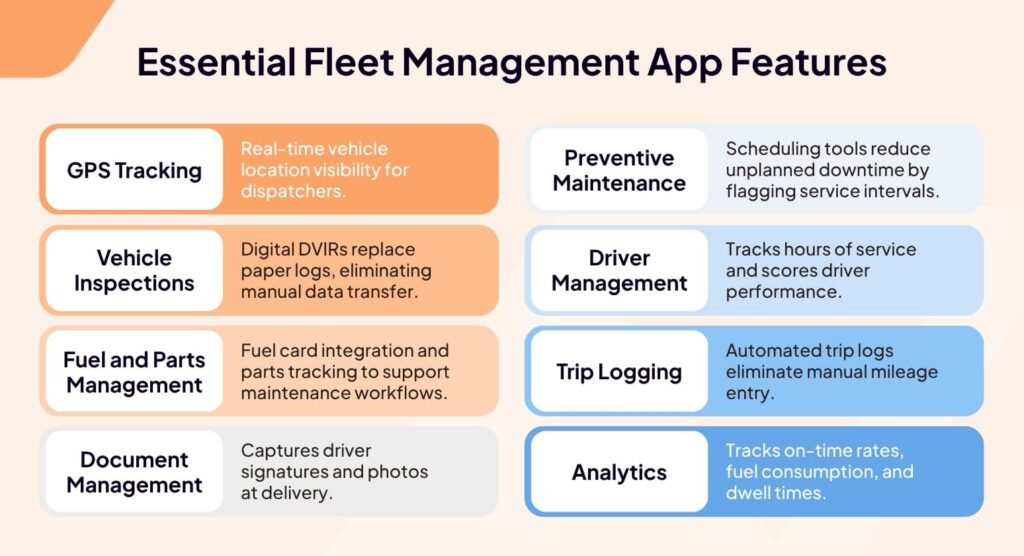
When evaluating fleet management platforms, focus on the capabilities that directly impact your daily operations and cost structure rather than feature lists that sound impressive but don’t solve real problems.
GPS Tracking and Real-Time Location Visibility
GPS tracking captures exact vehicle locations throughout transport routes and enables your dispatchers to spot delays before they cascade. When a truck stops unexpectedly or deviates from schedule, you can reroute other drivers immediately rather than discovering problems hours later.
Preventive Maintenance Management
Maintenance scheduling tools reduce unplanned downtime by automatically flagging vehicles approaching service intervals based on mileage or time thresholds.
Your team can schedule preventive work before breakdowns occur. This reduces the manual step of tracking service dates across spreadsheets while catching maintenance needs earlier.
Vehicle Inspections and Work Orders
Digital DVIRs replace paper inspection logs and eliminate manual data transfer between drivers and maintenance teams. Your technicians receive defect reports instantly rather than waiting for end-of-shift handoffs.
Work orders generate automatically from flagged issues, reducing turnaround time between inspection and repair dispatch.
Driver Management and Scheduling
Fleet apps track hours of service violations before they happen and score driver performance across safety metrics. Your dispatchers can catch compliance risks early and adjust routes when drivers approach HOS limits, eliminating last-minute scheduling scrambles.
Fuel Management
Fuel card integration via API connects consumption data directly to your fleet platform. You can track idle time by vehicle and identify high-consumption routes faster. Your team spots fuel waste patterns that would otherwise stay hidden in separate systems.
Trip Logging and Geofencing
Automated trip logs eliminate manual mileage entry and reduce driver paperwork. Geofenced zones trigger alerts when your drivers enter or exit specific locations. Your team gets exact arrival times and route adherence data without requiring driver input.
Inventory and Parts Management
Some fleet platforms include parts tracking and stock level monitoring to support maintenance workflows. Your team spends less time locating parts when inventory data connects to work orders. This reduces maintenance delays and keeps vehicles in service longer.
Document Management for BOLs and PODs
Fleet apps capture driver signatures and photos at delivery, but these basic image captures completely miss what happens at the gate, yard, and dock. Because these over-the-road apps don’t connect to your facility’s internal workflows, your team still waits days or weeks for paper BOLs to return through the mail, blocking invoice processing and leaving shipment status incomplete.
Reports, Analytics, and Carrier Scorecarding
Fleet reporting tools track on-time rates, fuel consumption, and in-transit delays to guide your carrier allocation decisions. Carrier scorecards reveal which providers consistently deliver and which create operational friction on the road. This data drives program adjustments and performance reviews.
The Gate Visibility Gap Where Fleet Management Apps Stop
Executive summary: Fleet tools can confirm arrival, but they usually cannot manage post-arrival execution. Yard visibility is needed to track dock assignments, trailer positions, dwell time, document status, and the operational causes behind detention or OTIF misses.
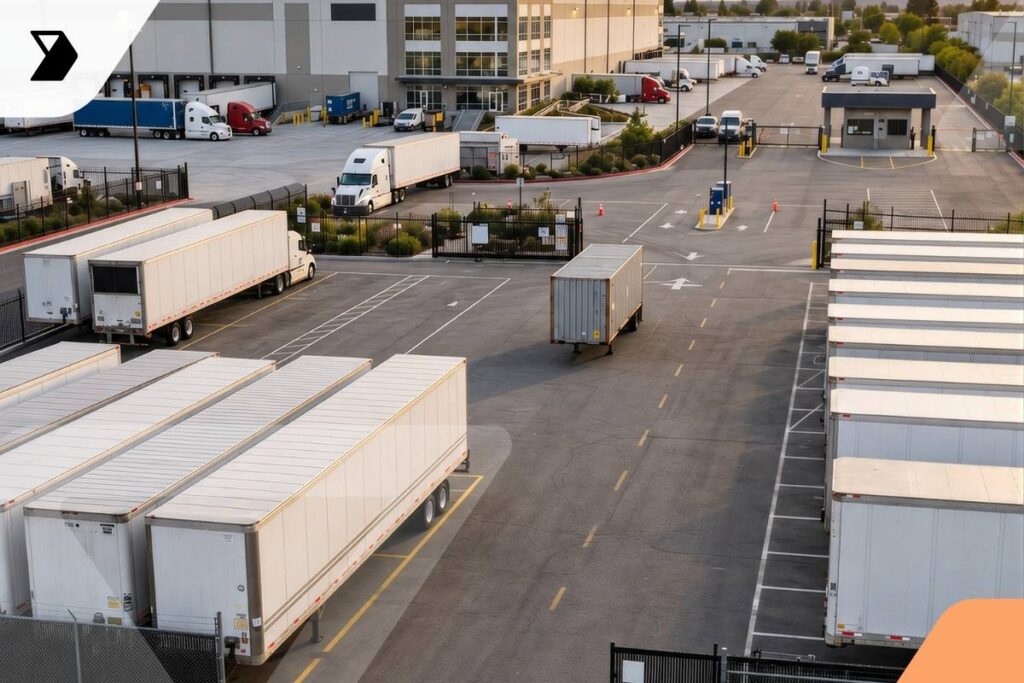
Fleet management apps deliver precise location data until the truck reaches your gate. Then visibility stops. You lose sight of trailer positions across the yard, dock assignments, dwell times, and document status, leaving operational decisions to guesswork when they matter most.
Why “Where’s My Load” Calls Don’t Stop When the Truck Arrives
Your fleet platform shows the driver checked in at 2:47 PM. Now what? Gate-in is just a timestamp, not a workflow. You’re still fielding calls asking whether the trailer made it to a dock, how long unloading will take, or when the driver can leave.
You can’t see dock assignments, trailer positions across the yard, or document status. The accountability gap that creates detention charges starts the moment visibility ends at your gate.
Detention, OTIF Misses, and Damaged Carrier Relationships
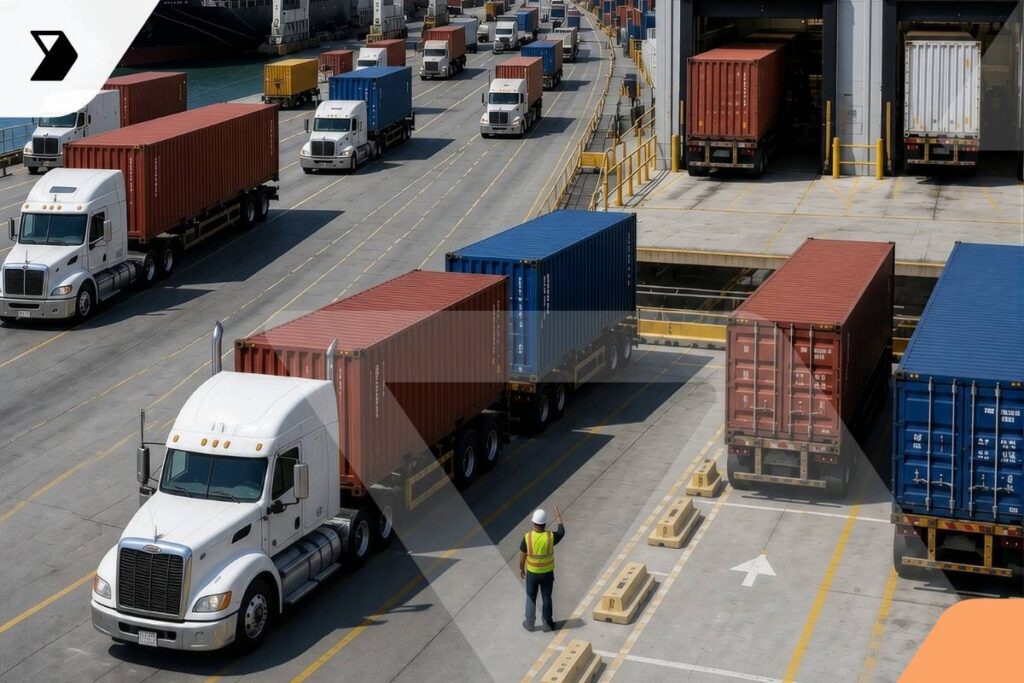
Yard dwell is where your detention budget and Shipper of Choice status are won or lost. When drivers sit for hours without dock assignments or clear communication, detention charges accumulate faster than operational savings.
Your carrier relationships suffer when reliable capacity providers start avoiding your facilities. OTIF penalties compound the damage; delays drivers experience in your yard ripple into late deliveries that trigger customer chargebacks and erode service metrics.
Fleet Software vs. Yard Management Software: Two Halves of the Same Shipment
Executive summary: Fleet software manages movement between facilities, while YMS manages what happens inside the facility. Connecting both creates end-to-end shipment visibility from dispatch through gate-in, dock assignment, dwell tracking, and document return.
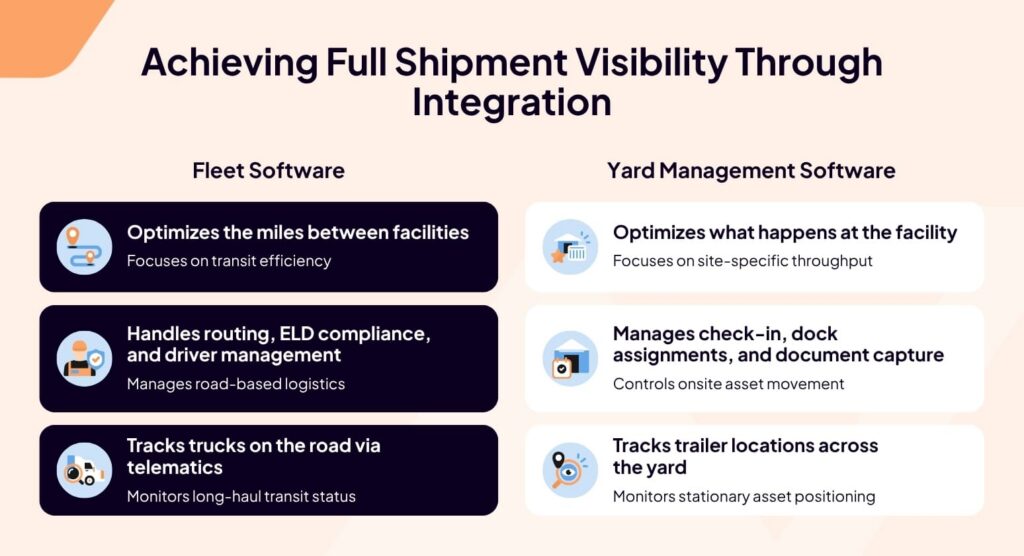
Fleet software optimizes the miles between facilities. Yard management software optimizes what happens when the truck gets there. These are complementary layers in your operation.
Your fleet apps handle routing, ELD compliance, and driver management across the road. Your yard management system handles check-in, dock assignments, and document capture at the facility.
Connecting these two layers keeps shipment data and status updates synchronized from dispatch through delivery, closing the visibility gap that leaves detention charges accumulating while your team fields “where’s my load” calls.
What Fleet Software Optimizes vs What YMS Optimizes
Fleet software optimizes the miles between facilities:
- Telematics tracks your trucks on the road.
- ELD compliance keeps drivers legal.
- Routing tools plan the most efficient paths.
YMS optimizes what happens when the truck arrives:
- Automated gate-in replaces manual check-in.
- Dock assignment eliminates driver wait time.
- Trailer tracking shows exactly where assets sit across your yard.
- Document capture converts paper BOLs into digital records.
Both layers need to connect at key handoffs — arrival notifications, dock status updates, and document flow — for your shipment data to stay synchronized from dispatch through delivery.
Why Optimizing One Without the Other Leaves Money on the Table
Fleet apps can’t reduce detention fees that accumulate across the yard while drivers wait for dock assignments. Your billing cycle stays slow when paper BOLs take days to return from drivers.
Guard labor costs remain high when manual check-ins create bottlenecks at the gate. These savings sit outside fleet software’s reach entirely.
Gate-In, Dock Assignment, Dwell, and Document Return
Gate-in creates a timestamp but tells your yard team nothing about dock availability or driver priority. Your spotters then move trailers to assigned locations across the yard without real-time position updates.
Drivers wait for dock assignments while your team manually tracks which doors are ready. Document capture happens at delivery completion, but BOL returns take days or weeks through paper workflows.
Vector Eliminates the Yard Visibility Gap in Your Fleet Management
Fleet management apps are built for the road, but the yard is where dwell time, detention fees, and documentation gaps silently erode the efficiency those apps were meant to create. Vector is the layer that closes that gap.
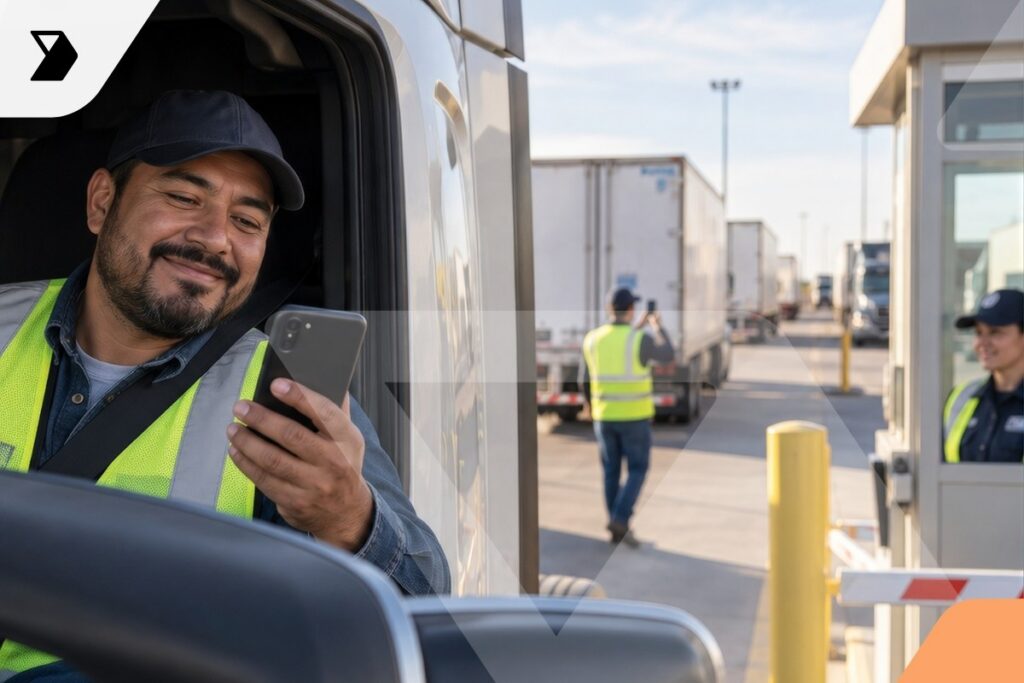
- Gate visibility: Vector’s digital check-in and geofenced FastPass® solution captures driver arrivals in real time, eliminating unannounced arrivals that create dock scheduling chaos
- Yard orchestration: Vector’s YMS delivers rules-based automated task assignments and continuous trailer tracking without needing to add expensive RFID infrastructure
- Detention reduction: Vector’s dynamic dock assignments and real-time parking status visibility reduce driver wait times and the detention charges that follow
- Document digitization: Vector’s eBOL converts paper BOLs into legally binding electronic records, enabling same-day invoicing instead of week-long billing cycles
- System connectivity: Vector connects with existing TMS, WMS, and ERP platforms — including SAP, Oracle, Manhattan Associates, and Blue Yonder — so yard data flows where it’s already needed
Vector’s yard management platform is the missing yard layer that completes what your fleet apps started.
FAQs
Why Is Fleet Management Important for Shippers and Not Just Carriers?
Shippers with private or dedicated fleets face identical challenges to carriers: ELD compliance, route optimization, fuel management, and real-time location tracking.
Your fleet operations require the same digital visibility into driver hours, vehicle maintenance, and delivery status that carriers depend on.
Fleet management tools reduce your compliance risk, cut fuel costs, and give you direct control over delivery performance without relying on third-party carrier reporting.
How Much Do Fleet Management Apps Cost?
Fleet management app pricing varies widely based on platform choice, fleet size, and feature requirements. Most platforms use per-vehicle monthly pricing that ranges from basic tracking to comprehensive fleet intelligence packages.
Focus on the total cost of ownership beyond the monthly fee. Factor in implementation costs, training time, and integration expenses with your existing TMS or dispatch systems when evaluating options.
How Do I Improve Fleet Performance When My Yard Is the Bottleneck?
Fleet apps can’t fix what happens inside the fence. Your trucks may arrive on time, but without dock-to-yard transparency, drivers still wait hours for assignments while detention charges accumulate.
That’s where a yard layer like Vector addresses the visibility gap your fleet tools can’t reach. You need both systems working together to eliminate bottlenecks from gate-in through document return.
What’s the Difference Between Fleet Management, Telematics, and Yard Management Software?
Fleet management and telematics optimize the miles between your facilities. Yard management software optimizes what happens when trucks arrive. Fleet tools track vehicles, manage driver compliance, and handle routing.
Yard systems manage gate operations, dock assignments, and trailer tracking across your facility. Vector is an example of a digitally enabled yard layer that connects to your TMS, synchronizing shipment data between road and facility operations.
Published on September 25, 2020
Last updated on June 02, 2026
Subscribe to stay updated on Vector and logistics trends
" " indicates required fields

Continue reading
Ready to transform your supply chain?
Increase efficiency and productivity. Say goodbye to delays, handwriting errors, and time-intensive manual data entry.