
The Operations Leader’s Guide to Choosing Digital Check-In or a Full YMS
5 min read
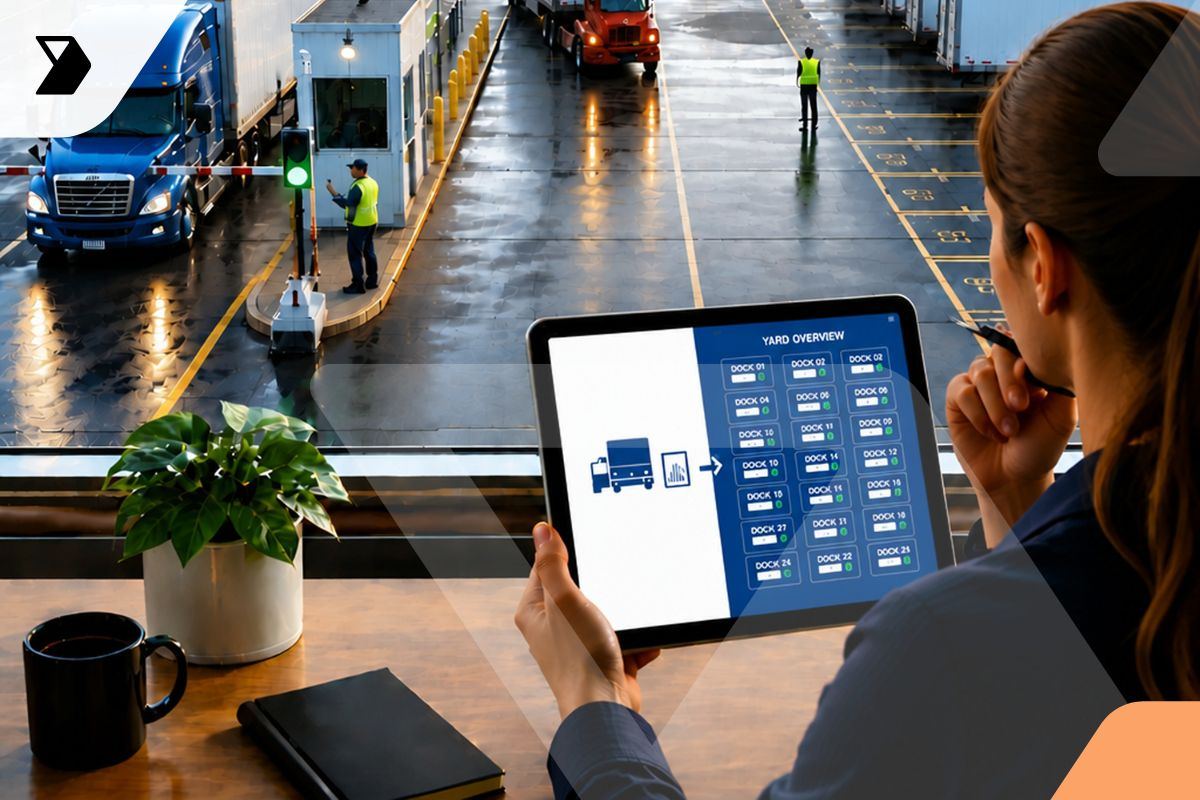
Key takeaways
- Digital check-in and a full YMS are two layers, not two versions of the same thing. Check-in owns the gate. A YMS owns the yard.
- Check-in solves gate throughput, driver wait, and arrival data. A full YMS adds spot assignment, move management, dwell tracking, and trailer inventory.
- You have outgrown check-in alone when trailers go missing in the yard, spotters guess their next move, or dwell climbs with no way to see why.
- Check-in can run on top of a YMS you already have, so you can start light and add the yard layer later without ripping anything out.
“Full YMS or just digital check-in” is a real fork, and it gets muddied when a vendor sells one as if it were the other. They solve different problems. Check-in fixes the gate. A yard management system runs the yard. Which one you need depends on where your operation actually hurts.
The good news is that these are layers, so you don’t have to guess big. You can adopt the gate layer first, prove it out, and add the yard layer when the operation calls for it.
This guide defines each layer, names the signals that you’ve outgrown check-in, shows how check-in can run alongside a YMS you already own, and compares what each takes to stand up.
Ready to transform your supply chain?
Increase efficiency and productivity. Say goodbye to delays, handwriting errors, and time-intensive manual data entry.
Full YMS or Digital Check-In (Two Layers, Not Two Versions of the Same Thing)
Picture the load’s path through your facility. It arrives at the gate, moves through the yard to a door, sits until it’s worked, and leaves. Digital check-in owns the first step. A yard management system owns the steps after it.
That is the whole distinction. Check-in is the front door: it gets a driver identified and through the gate fast.
A YMS is the floor behind the door: it decides what moves next, tracks every trailer, and watches dwell.
One is a gate tool. The other is a yard system that includes a gate.
They stack cleanly, which is why the choice is not either-or forever. Many facilities start with check-in because the gate is where the pain shows first, then add the yard layer once they can see how much time trailers lose after they clear the gate.
What Digital Check-In Solves Across Yards
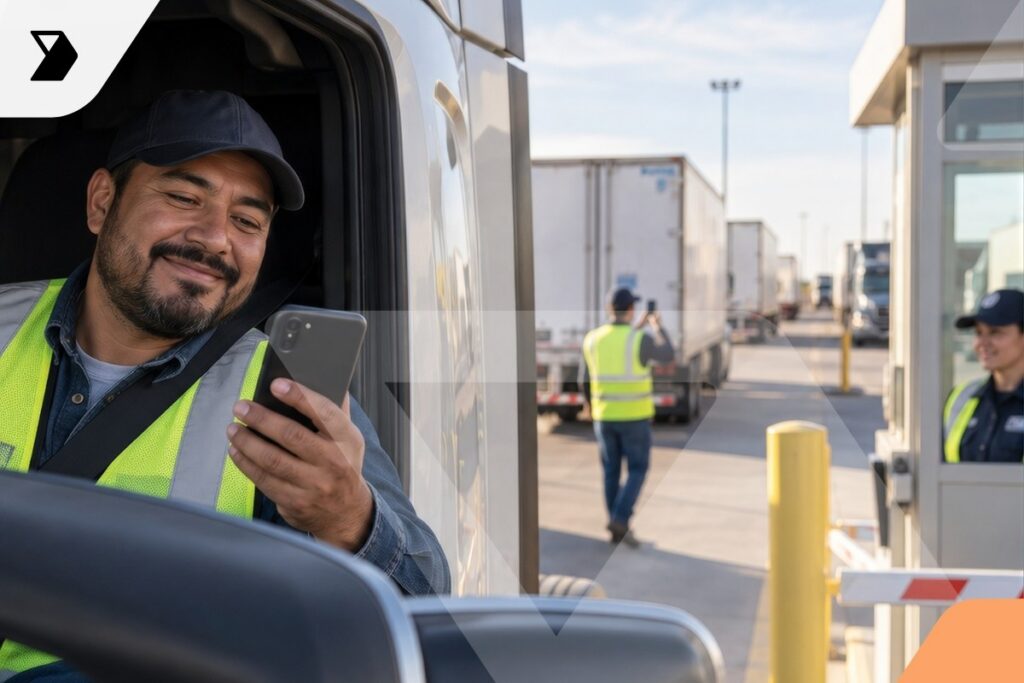
Digital check-in is the layer that fixes the gate. It replaces a guard keying in details with a driver who identifies themselves before or on arrival, so the lane keeps moving. On modern YMS like Vector, check-in runs on Vector PreCheck® and FastPass® over SMS, app, or kiosk, with no app to download.
Gate Throughput and Driver Wait
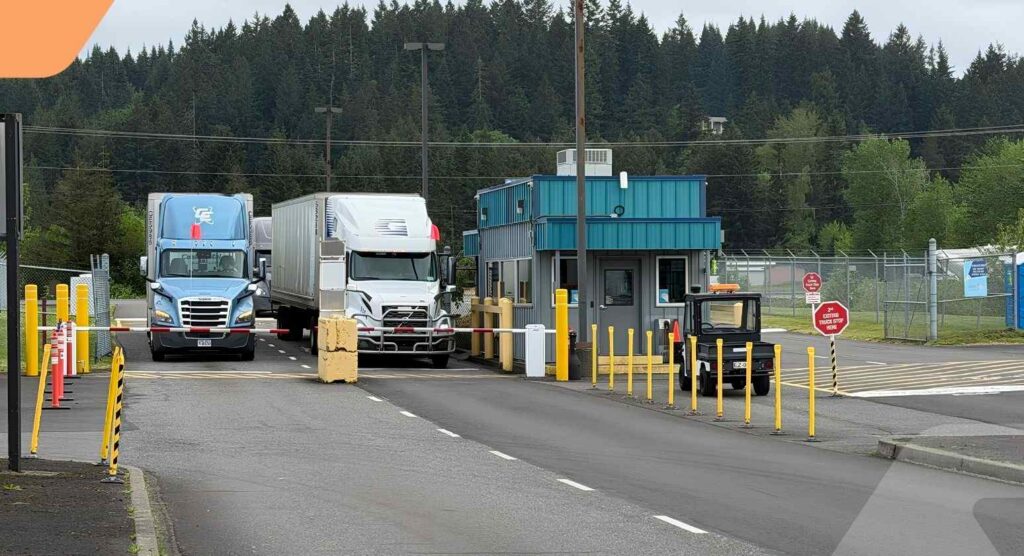
The first thing check-in buys you is a faster lane. A driver checks in from the cab, the gate clears them without a person keying anything, and the queue stops backing up onto the road. Automatic translation supports drivers who don’t share the gate staff’s language, so nobody hunts for an interpreter.
Watch: Vector: Streamlining Driver Check-In at Warehouses and DCs. Video demonstrates the exact self-check-in flow that clears drivers at the gate.
Cutting driver wait at the gate is often the fastest win a facility can point to, and it shows up across every gate model, from guard-assisted to unmanned.
Clean Arrival Data
The second thing check-in buys you is data. Every arrival is captured with its appointment, carrier, and trailer, and that record feeds the systems you already run. You know who is on-site and when they got there, without a clipboard. That arrival data is useful on its own, and it becomes the foundation the yard layer builds on later.
Check-in doesn’t move trailers around the yard or tell a spotter what to do next. That is the yard layer’s job.
What a Full YMS Changes in How You Manage Yard Operations
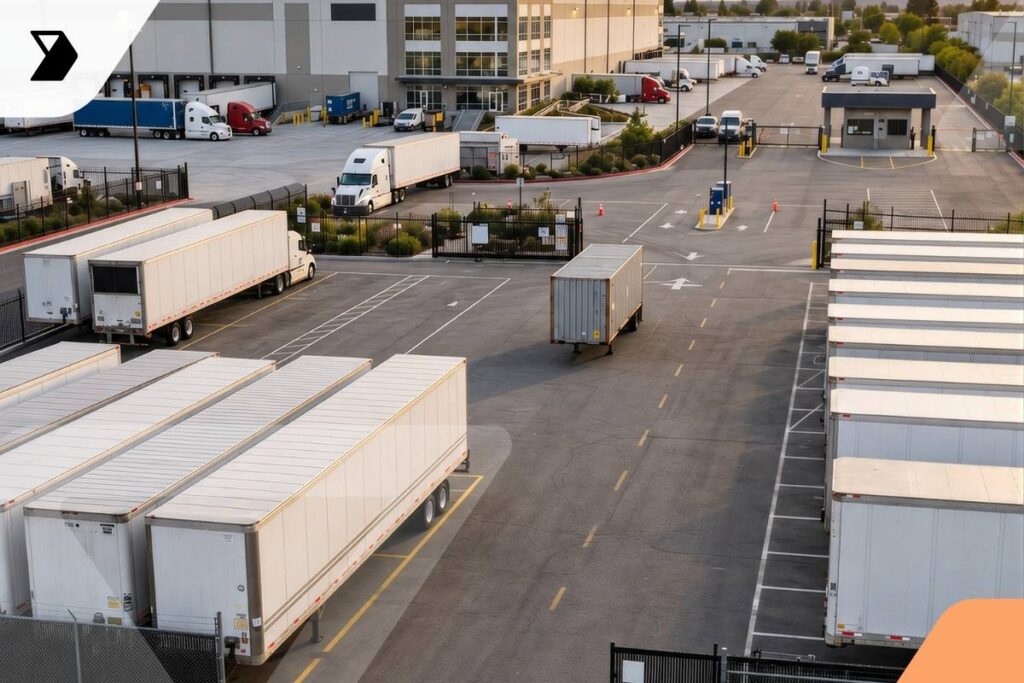
A full YMS picks up where check-in stops: when a trailer is inside the fence. It turns a lot full of trailers into an actionable map.
Spot Assignment and Move Management
The core of a YMS is deciding what moves next and who does it. Rules assign the next job to the nearest yard spotter, track it to completion and keep the queue prioritized. Instead of a dispatcher working a radio and a whiteboard, the moves come to the spotter’s tablet in order. That is the difference between a yard that reacts and one that runs to a plan.
Dwell Tracking and Trailer Inventory
The other half is visibility into what’s sitting and for how long. A YMS tracks every trailer’s location and status, monitors dwell time and detention, and keeps a live count of trailer pools so you know what’s available and what’s aging.
Vector does this without RFID tags or costly hardware, so location comes from check-ins and spotter photos rather than a tag on every asset. That is what lets a team stop walking the yard several times a day to count by hand.
Signals You’ve Outgrown Check-In Alone
Check-in is enough right up until the yard behind the gate becomes the bottleneck.
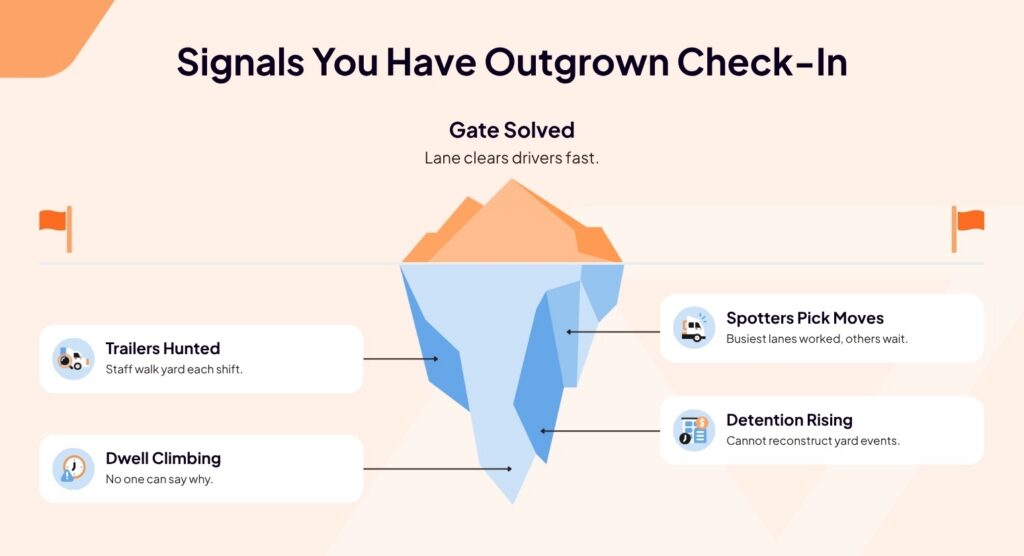
Here are signs that tell you that has happened:
- Staff walk the yard to find a specific trailer, more than once a shift.
- Spotters decide their own next move, so the busiest lanes get worked and others wait.
- Dwell is climbing, and no one can say which step or carrier is driving it.
- Detention charges are rising, and you can’t reconstruct what happened in the yard to contest them.
- You have no reliable count of which trailers are on-site, loaded, empty, or aging.
- The dock keeps waiting on trailers that are somewhere in the yard, just not where anyone thinks.
One of these is friction. Several at once means the gate is solved and the yard is now the problem. That is the point where the yard layer pays for itself.
Start With the Layer Your Yard Needs, With Vector
The honest answer to “full YMS or just digital check-in” is that it depends on where your yard hurts, and you can start with the layer that hurts most. Vector runs both, so the gate layer and the yard layer are the same platform, and moving from one to the other is a step up, not a switch:
- Digital Check-In: Vector PreCheck® and FastPass® clear the gate over SMS, app, or kiosk with no app to download, so the lane keeps moving.
- Clean Arrival Data: Every arrival is captured with its appointment, carrier, and trailer, and pushed into the systems you already run.
- Full Yard Management: Rules-based spot assignment, move tracking, and dwell monitoring turn the yard into a map your team can act on.
- RFID-Free Trailer Tracking: Real-time trailer location and inventory come from check-ins and spotter photos, with no RFID tags or costly hardware.
- Fits What You Have: API, EDI, and email connections let check-in run alongside an incumbent YMS, WMS, or TMS until you choose to consolidate.
See how Vector runs the gate and the yard and where your operation fits today.
FAQs
Is Digital Check-In Part of a YMS or a Separate Product?
Both are possible, and that is the useful part. Check-in is its own layer that can run on its own or feed a separate YMS, and it is also included when you run a full yard platform. So you can buy the gate layer alone, or get it as the front end of the yard system. The right shape depends on whether your problem stops at the gate or runs into the yard.
Can I Add a Full YMS Later If I Start With Check-In?
Yes, and that is a common path. Facilities often start with check-in because the gate is where the pain shows first, then add spot assignment, move management, and dwell tracking once they can see how much time trailers lose after the gate. On one platform, that move is a step up, not a new implementation.
Will Digital Check-In Work With the YMS We Already Own?
Yes. Check-in connects through API, EDI, and email, so the arrival, appointment, and trailer data it captures flows into an incumbent YMS, WMS, or TMS. You get a faster gate and cleaner arrival data without replacing the yard system you already run.
How Do I Know I Have Outgrown Check-In Alone?
Watch the yard, not the gate. When staff walk the lot to find trailers, spotters pick their own moves, dwell climbs with no clear cause, or detention rises, and you can’t reconstruct what happened, the gate is solved, and the yard becomes the bottleneck. That is the signal to add the yard layer.
Published on September 08, 2026
Last updated on September 08, 2026
Subscribe to stay updated on Vector and logistics trends
" " indicates required fields

Continue reading
Ready to transform your supply chain?
Increase efficiency and productivity. Say goodbye to delays, handwriting errors, and time-intensive manual data entry.