
Advanced Strategies to Prevent High-Value Cargo Theft
10 min read
Key takeaways
- High-value cargo theft often occurs when trailers are untracked, carrier identity is weakly verified, or paper documents are manipulated after handoff.
- Cargo theft prevention requires real-time yard visibility, verified gate access, and trusted documentation for claims.
- The strongest security workflows combine chain-of-custody planning, driver verification, secure parking, trailer tracking, and eBOL capture. Together, these controls reduce the blind spots that thieves and fraudsters exploit.
- Digital audit trails help logistics teams detect fraud earlier, resolve OS&D claims faster, and protect carrier relationships after incidents.
Your yards hold hundreds of trailers with no real-time location tracking. Your gates process drivers without verified access records. Your documentation sits disconnected from the actual cargo moving through your facilities.
This black-box condition creates the perfect environment for cargo theft and fraud to flourish undetected.
When trailer locations remain unknown, gate activity goes unrecorded, and documents can’t be matched to physical shipments, you face stolen loads that take days to discover.
Ready to transform your supply chain?
Increase efficiency and productivity. Say goodbye to delays, handwriting errors, and time-intensive manual data entry.
The strategies in this article help your team detect fraud earlier, resolve claims faster, and transform your facilities from theft targets into secure, transparent operations that carriers trust.
The High-Value Cargo Security Challenge for Shippers
Executive summary: Cargo security is no longer only about locks, guards, and perimeter control. The bigger risk is operational opacity across yards, carriers, documents, and custody handoffs.
High-value cargo security has evolved from a perimeter protection challenge into a strategic operations problem that touches every part of your freight network. Your facilities, carriers, and documentation systems now create interconnected compliance and operational risks that traditional physical security can’t address.
The challenge isn’t just preventing theft at the loading dock. You’re managing document-related risk exposure across multiple handoff points where cargo changes custody.
Forward-thinking shippers recognize that security gaps in yard visibility, carrier verification, and documentation integrity directly impact claims resolution, carrier relationships, and operational costs.
Each untracked handoff point becomes a potential failure that compounds across your entire logistics network.
The True Cost of a Loss Goes Beyond Stolen Goods
When cargo goes missing, your replacement costs are just the beginning.
- Claims disputes stretch for months while your team hunts for missing paperwork and reconciles conflicting delivery records.
- Documentation gaps block your investigation at every turn.
- You can’t prove what was loaded, when drivers arrived, or who signed for partial deliveries.
- Your staff burns hours reconstructing timelines from incomplete records. Insurance claims stall without verifiable proof of loss. Carrier relationships deteriorate when you can’t determine fault.
These accumulated administrative costs often exceed the stolen goods themselves, creating operational disruption that compounds across every disputed shipment in your network.
The 3 Types of Cargo Theft Attacks
Executive summary: Cargo theft prevention must address physical theft, strategic theft, and documentation fraud together. Each threat uses a different weak point in the freight workflow.
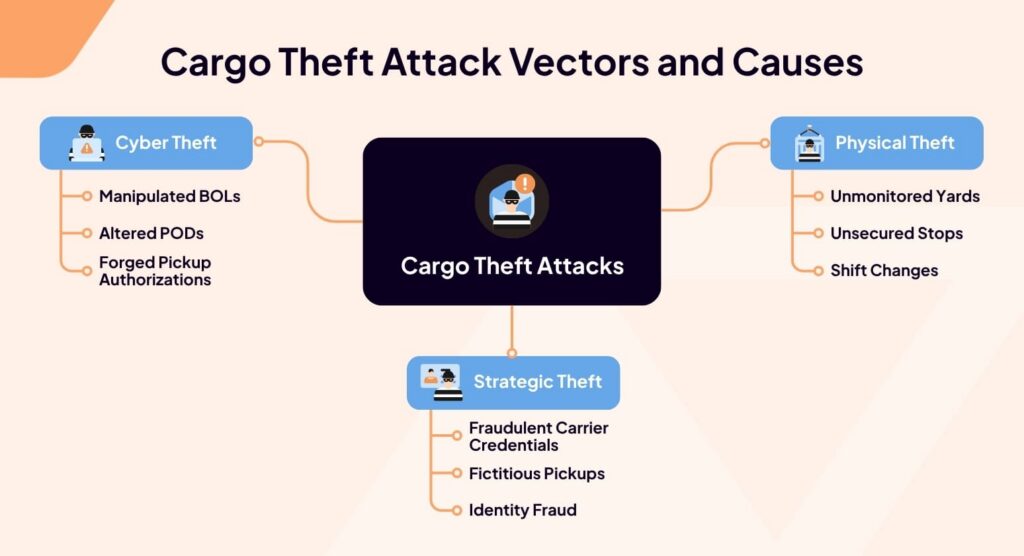
Cargo theft rings target three distinct attack surfaces across your supply chain.
Physical theft exploits unmonitored yards and unsecured stops. Strategic theft uses fraudulent credentials to authorize fictitious pickups. Digital fraud manipulates documentation after legitimate handoffs occur.
Each attack vector requires different defensive strategies to close the exposure gaps theft operations depend on.
Straight Theft and Pilferage at Facilities and Stops
Straight theft attacks the most predictable vulnerability: unmonitored access points during shift changes. Your docks become targets when loading crews rotate without continuous oversight.
Yard theft spikes during evening and weekend hours when trailer moves aren’t consistently monitored.
Rest stop pilferage exploits the gap between your facility security and driver route decisions. Thieves scout for trailers parked at unvetted stops where exact location tracking ends.
Each unmonitored stop extends your exposure window beyond what any facility security plan can control.
Strategic Theft Using Fictitious Pickups and Identity Fraud
Strategic theft operates through fraudulent carrier credentials that fool facility staff into releasing legitimate cargo.
Criminals create fake carrier profiles, forge pickup orders, and present spoofed driver identification at your gates. These schemes succeed because they exploit gaps in real-time verification systems.
Unlike physical theft, fictitious pickups appear completely legitimate during the handoff. Your dock team releases cargo to someone with proper paperwork and matching credentials.
The fraud only surfaces hours or days later when the real carrier arrives for pickup. By then, your high-value cargo has vanished through what looked like a normal business transaction.
Secure, verifiable records with exact location tracking and timestamp verification make these schemes much harder to execute successfully.
Cyber Theft and Documentation Manipulation
Digital fraud targets your paper-based documentation workflows through manipulated BOLs, altered PODs, and forged pickup authorizations.
Paper documents create extensive document-related risk exposure because they can’t verify authenticity or track modification history. When a forged pickup order clears an untracked hand-off point, your cargo disappears before you realize the documentation was fraudulent.
Criminals exploit these gaps by intercepting legitimate shipment data and creating convincing forgeries. Your team has no way to distinguish authentic documents from sophisticated fakes.
Digital documentation systems provide cryptographic signatures and tamper-evident audit trails that paper records cannot provide.
The Blind Spots Where Cargo Theft Prevention Usually Breaks Down
Executive summary: Theft exposure rises at loading docks, yard storage points, and unsecured transit stops. These are the places where custody often changes faster than documentation can prove.
High-value cargo faces its greatest exposure at three critical moments: loading and unloading handoffs, extended yard dwell time, and unplanned transit stops. Each represents a vulnerability window where your security controls weaken and theft opportunities multiply.
Loading and Unloading: The Gate and Dock Blind Spots
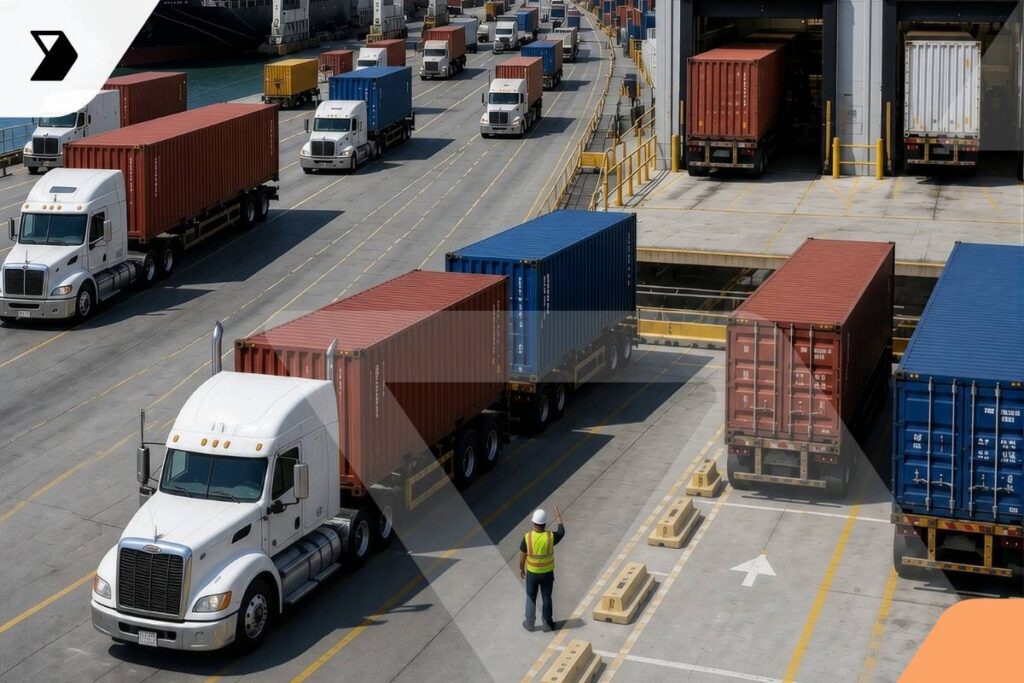
Gate entry and dock operations create the highest-frequency exposure windows in your facility. Driver identity verification at the gate often relies primarily on manual license checks. Trailer handoffs at the dock may occur without digitally verified records showing who delivered specific cargo and when.
With these untracked hand-off points, you can’t verify which driver actually entered your facility. You can’t match dock timestamps to specific individuals. Document-related risk exposure compounds when paper BOLs change hands without authentication.
Every unrecorded handoff widens the window where fraudulent activity goes undetected.
In-Yard Storage: When Trailers Sit Without Visibility
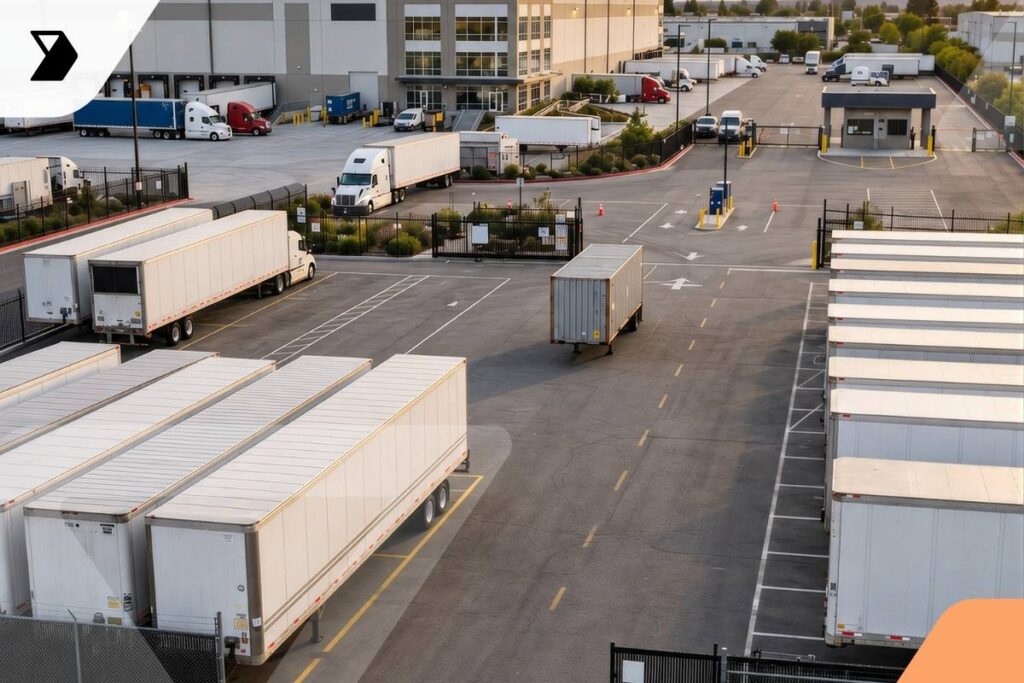
Unmonitored trailers become prime targets for theft rings that scout facilities for extended periods. Your yard create a significant risk when trailers sit for days without confirmed locations.
Digital tracking shows exactly which trailers have been stationary beyond normal dwell times. This data enables your team to relocate high-value loads before they attract attention.
Physical patrols can’t match the coverage that real-time location monitoring provides.
When your security team knows a pharmaceutical trailer has been idle for 48 hours, they can prioritize that area for checks or move the trailer to a more secure zone.
In-Transit Risks and Parking Gaps
Unplanned stops at unsecured locations create exposure windows that extend far beyond your facility’s security perimeter. When drivers deviate to truck stops, rest areas, or roadside parking without security protocols, high-value cargo sits unmonitored for hours.
Your team loses visibility into trailer location and status during these stops. Each unvetted location introduces new theft opportunities that compound over multi-day hauls. The longer the route, the more stops made, which multiplies the opportunity for exposure.
Route planning that factors secure parking availability reduces these exposure windows before they become security incidents.
Advanced Strategies for High-Value Cargo Theft Prevention
Executive summary: No single control can close every theft pathway. The most effective cargo security programs combine chain-of-custody planning, carrier verification, yard tracking, gate controls, document authentication, and audit trails.
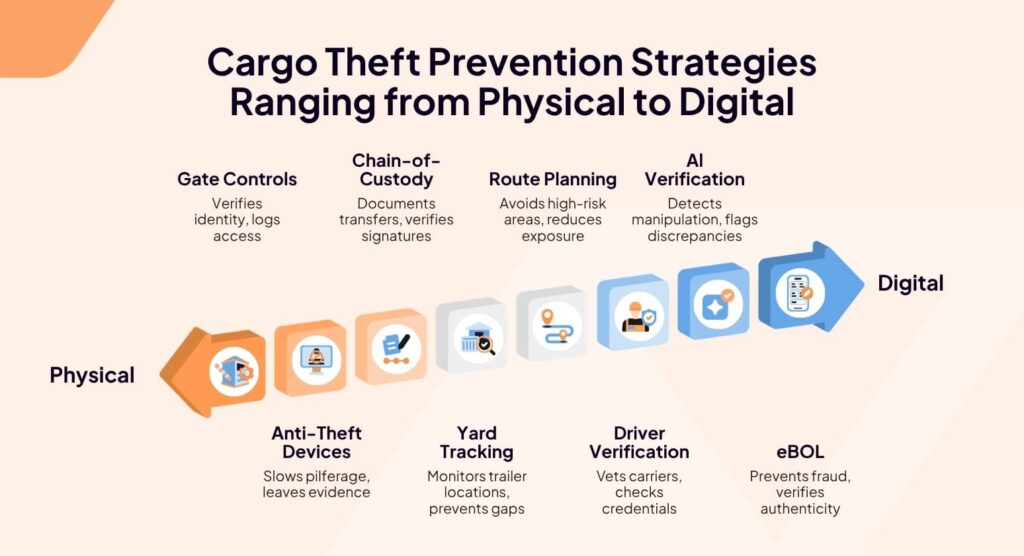
High-value cargo theft costs extend far beyond replacement value. Your security strategy must address three attack surfaces: physical access points, documentation vulnerabilities, and operational blind spots.
Each defense layer closes specific gaps that organized theft rings exploit to access, steal, and move your cargo undetected.
Building a Chain-of-Custody Shipping Plan from Booking to Delivery
Your chain-of-custody plan starts at booking, not at the gate. Document carrier assignment with verified DOT numbers and insurance certificates. Your plan specifies driver identity verification requirements before dispatch.
Gate access procedures define check-in protocols and required documentation. Dock handoff protocols establish who signs for what at each transfer point. Your TMS connects to gate systems via API to match appointments with arrivals.
Records designed to prevent fraud include timestamped signatures and geocoordinate verification. Your dock team logs trailer condition and seal integrity at each handoff.
Final delivery documentation requires electronic signatures with location stamps, creating secure, verifiable records from origin to destination.
Interviews, Background Checks, and Identity Verification for Drivers and Carriers
Layered driver verification starts with comprehensive carrier vetting before any pickup assignment.
Your team should verify DOT numbers, insurance certificates, and safety ratings through FMCSA databases. Driver credential checks must include commercial license validation and background screening for high-value loads.
Real-time identity verification at the gate creates the final defense layer. Your gate team should match driver licenses against pickup authorizations and digital records of driver identity and credentials.
No single check eliminates fictitious pickup risk entirely. Combined verification layers close the document-related risk exposure that fraud schemes exploit most frequently.
Securing the Yard with Real-Time Visibility
Your yard becomes a security liability when you can’t track trailer locations or monitor asset movement in real time.
Vector’s YMS delivers continuous trailer tracking and dock-to-yard transparency without the cost of adding new RFID infrastructure. This real-time yard oversight eliminates the location gaps that theft rings exploit during extended dwell periods.
Your team gains exact asset visibility across the entire facility, extending chain of custody beyond the fence through multi-player collaboration with carriers and suppliers.
Digital Check-In and Guardless Facility Controls
Digital check-in systems like Vector’s FastPass® strengthen identity verification by capturing exact driver credentials, timestamps, and geofenced location data before gate access. Your facility can confirm driver identity through SMS, app, or kiosk verification that connects to your TMS via API.
This helps prevent fictitious pickups by creating verifiable records of who accessed your facility and when, transforming guard operations into welcome centers focused on security rather than manual processing.
Real-Time Trailer Tracking and Yard Audits Without RFID
Vector’s YMS delivers exact trailer location and status throughout your yard without needing to add expensive RFID infrastructure.
Your team can spot detention risks before charges accrue and identify which trailers need immediate attention. This reduces physical yard audits from 4x daily to 1x daily for exceptions while maintaining continuous visibility into every asset.
Route Planning with Secure Parking and Congestion Alerts
Vector’s congestion alerts across ports, rail ramps, and transit routes give your team advance notice of delays to avoid unplanned stops in high-risk areas. This upstream visibility data shows bottlenecks before they impact your schedule.
You can use this information to reroute around congested zones or adjust departure times. The result is shorter exposure windows and reduced dwell time in vulnerable locations.
Anti-Theft Devices, Seals, and Securement Tools
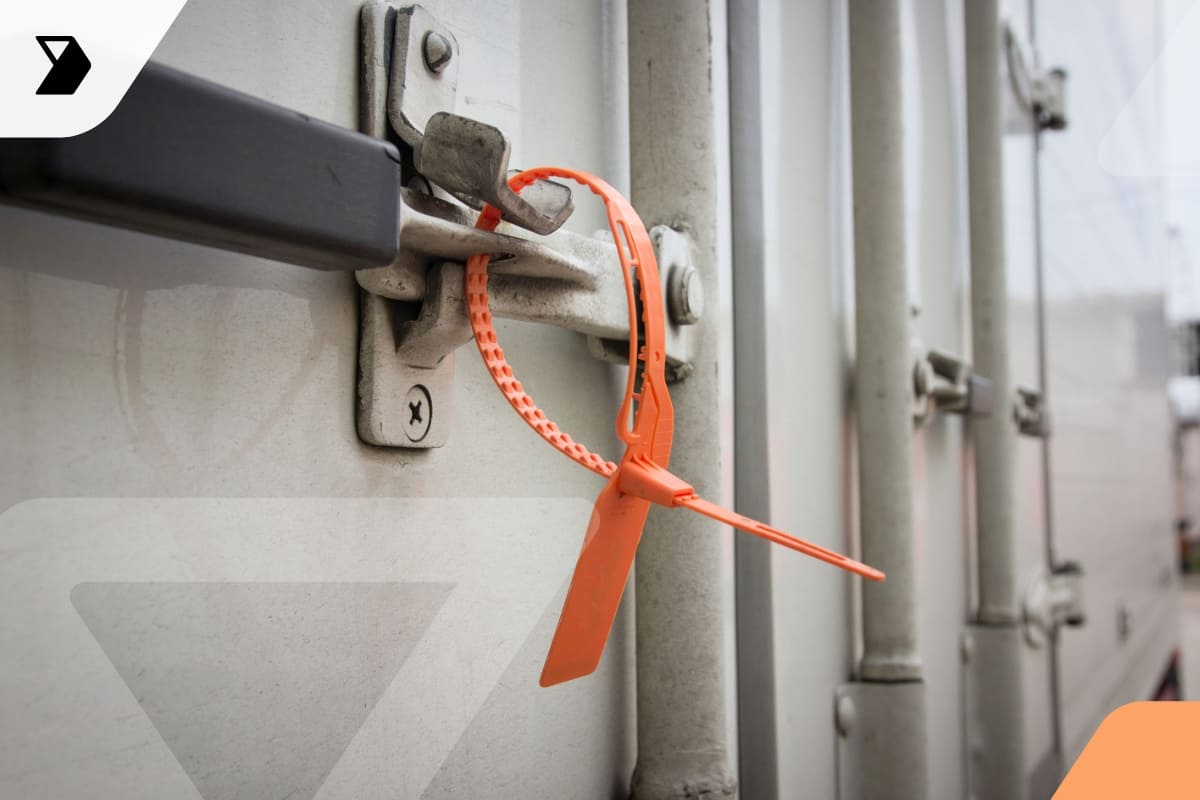
Physical security tools form your first line of defense against opportunistic theft. High-security trailer seals create tamper-evident barriers that make thieves leave visible evidence of entry.
Kingpin and air cuff locks prevent unauthorized trailer movement from your yard.
Cargo bars and load securement devices help deter cargo theft during transit and staging. Your team can document these tools through secure, verifiable records that support claims resolution when theft occurs.
Preventing Fraud and POD Manipulation with eBOL
Vector’s eBOL solution replaces forgeable paper documents with records designed to prevent fraud.
AI Imaging Agents verify document authenticity and detect POD manipulation before it becomes a loss. Electronic signatures with timestamps and geocoordinate stamps create secure, verifiable records that keep shipment data, status updates, and documents synchronized.
Your team can spot timestamp and location mismatches immediately, enabling intervention before disputes escalate.
Combining Physical, Procedural, and Digital Security
Physical security measures stop the bolt cutters. Procedural vetting catches the fake credentials. Vector’s digital layer connects these defenses across your entire supply chain through multi-player collaboration between your suppliers, carriers, and receivers.
Vector’s eBOL, digital check-in, and YMS keep shipment data, status updates, and documents synchronized from booking through delivery. Your team gains physical location visibility of trailers, digital verification of driver identity, and fraud-resistant documentation at every handoff.
This connected workflow transforms security gaps that enable theft into operational advantages that prevent detention charges and resolve claims faster.
Replacing “Where’s My Load” Calls with Real-Time Status
Vector’s real-time yard orchestration eliminates frequent “where’s my shipment” calls by providing exact trailer locations throughout your facility.
The same visibility gaps that cause these constant status calls create security vulnerabilities — when shipment location between dock and gate isn’t tracked, theft goes undetected longer. Your team now knows precisely where every load sits, enabling proactive updates to carriers and immediate response to security incidents.
Using AI and OCR to Detect Document Fraud
AI-powered document verification capabilities are emerging across leading logistics platforms to combat documentation fraud. Vector’s AI Imaging Agents detect POD manipulation, verify document authenticity, and flag discrepancies in real-time through automated OCR processing.
Your team can catch altered signatures, timestamp inconsistencies, and document forgeries before they clear the system. These tools extract structured data from unstructured shipping documents while creating secure, verifiable records that resist tampering and support faster claim resolution.
Creating an Audit Trail That Resolves Disputes and Claims Faster
Vector’s complete digital audit trail creates secure, verifiable records with electronic signatures, timestamps, and geocoordinate stamps that show exactly when and where each handoff occurred.
Your team can resolve OS&D claims faster because every signature links to a specific location and time. This eliminates invoice deductions caused by missing documentation. You can close disputes in days rather than weeks.
Establishing High-Value Cargo Theft Prevention with Vector
Vector’s connected facility platform closes the visibility gaps that enable cargo theft — eliminating the black-box conditions where high-value shipments become untraceable between gate entry and final delivery.
- Gate access documentation: Vector’s digital check-in captures geofenced timestamps, driver identity, and gate activity — creating a verifiable record of who entered your facility, when, and where
- Real-time trailer tracking: Vector’s YMS delivers continuous yard visibility without needing to add expensive RFID infrastructure, so your high-value equipment is never in an unknown location
- Digital audit trail: Vector’s eBOL generates electronic signatures, geocoordinate stamps, and timestamped records that tie documentation to physical cargo at every handoff
- AI-powered document verification: Vector’s AI Imaging Agents detect POD manipulation and verify document authenticity, flagging discrepancies before they become losses
- Documentation Reconciliation: Vector identifies discrepancies between the load plan and the shipping manifest before they escalate, supporting proactive intervention rather than after-the-fact investigation
Explore how Vector’s platform addresses high-value cargo security challenges across your multi-facility operation.
Frequently Asked Questions
How Do Companies Protect High-Value Cargo?
Companies protect high-value cargo through three defense layers that work together.
Physical hardening includes trailer seals, kingpin locks, and GPS tracking devices that raise the cost of theft attempts. Procedural controls cover carrier vetting, driver background checks, and documented chain-of-custody planning from booking through delivery.
Digital documentation uses yard management systems and workflow management platforms to create fraud-resistant records with timestamps and location verification.
Each layer closes specific vulnerability gaps that thieves exploit.
What Is the 10-10-80 Rule in Cargo Theft?
The 10-10-80 rule is a loss prevention principle about workforce behavior: roughly 10% of employees will never steal regardless of opportunity, 10% will steal whenever they can, and the remaining 80% are situational; their behavior depends on the environment and controls you put in place.
For yard and cargo operations, that 80% is where your security program has the most leverage. When trailers sit untracked, gate activity goes unrecorded, and documentation gaps make theft easy to conceal, you’re creating exactly the conditions that push situational employees toward opportunistic theft.
Conversely, real-time yard visibility, verified gate access, and tamper-evident documentation raise the perceived risk of getting caught. When every trailer has a confirmed location, every gate entry ties to a verified identity, and every handoff generates a timestamped audit trail, you eliminate the blind spots that opportunistic theft depends on.
What Are the Most Effective Anti-Theft Measures for Freight?
The most defensible freight security measures combine physical security measures with connected tracking and secure documentation.
GPS tracking provides real-time location visibility throughout transit. High-security trailer seals, kingpin locks, and cargo bars raise the cost and time required for theft attempts. Connected check-in systems verify driver identity at facilities through geofenced authentication.
Electronic documentation creates secure, verifiable records that resist tampering and forgery. Your team can layer these measures to address both opportunistic theft and strategic fraud targeting your high-value shipments.
How Can Shippers Prevent Strategic Cargo Theft and Fictitious Pickups?
Your team can stop fictitious pickups through layered identity verification at the gate. Implement real-time driver credentialing that verifies CDL status and carrier authority before entry.
Deploy geofenced check-in systems that capture exact driver location and timestamp data when they arrive. Match digital BOLs to verified driver credentials at pickup — this creates secure, verifiable records that fraudulent operators can’t replicate.
You can also connect credentialing systems to your TMS via API for automated verification workflows.
What Role Does Digital Documentation Play in Theft Prevention?
Digital documentation creates secure, verifiable records that theft rings can’t easily forge or manipulate.
Electronic BOLs with timestamps and geocoordinates establish exactly when and where cargo changes hands. Your team can catch discrepancies between documented handoffs and actual driver locations before they escalate into larger losses.
AI-powered verification detects document manipulation attempts that would slip past manual review. When fraudulent pickup orders surface weeks later, your digital audit trail provides the evidence needed to resolve disputes quickly.
Records designed to prevent fraud eliminate the documentation gaps that enable fictitious pickups and cargo diversion schemes.
Published on May 25, 2026
Last updated on July 30, 2026
Subscribe to stay updated on Vector and logistics trends
" " indicates required fields

Continue reading


Ready to transform your supply chain?
Increase efficiency and productivity. Say goodbye to delays, handwriting errors, and time-intensive manual data entry.