
The Top 8 Bill of Lading Software Solutions
6 min read
Key takeaways
- Purpose-built eBOL platforms like Vector provide legally binding electronic documentation with AI imaging, timestamps, and geocoordinate stamps that prevent disputes before they escalate.
- Enterprise TMS and WMS platforms from SAP, Oracle, Manhattan Associates, and Blue Yonder embed BOL functionality within existing financial workflows rather than offering standalone document management.
- Real-time yard visibility combined with digital proof of delivery transforms detention and accessorial charges from inevitable costs into defensible, disputable line items.
Paper PODs trickle back days after delivery, stalling your billing cycles while detention charges mount. Missing delivery confirmations block invoice approval.
Disputed documentation damages carrier relationships and delays freight budget reconciliation. Your team fields constant “where’s my POD” calls while cash flow suffers.
These document delays create cascading problems you control but can’t currently prevent. Bill of lading software transforms paper workflows into instant digital confirmation, compressing weeks-long billing cycles into same-day invoice processing.

Ready to transform your supply chain?
Increase efficiency and productivity. Say goodbye to delays, handwriting errors, and time-intensive manual data entry.
Here are the best platforms currently on the market.
The Best Bill of Lading Software Solutions
Executive summary: Purpose-built eBOL systems, yard management tools, and enterprise TMS and WMS modules represent the three main categories covered. Each leads with a different primary function — standalone digital documentation, yard execution, or full supply chain management — and treats BOL capabilities accordingly.
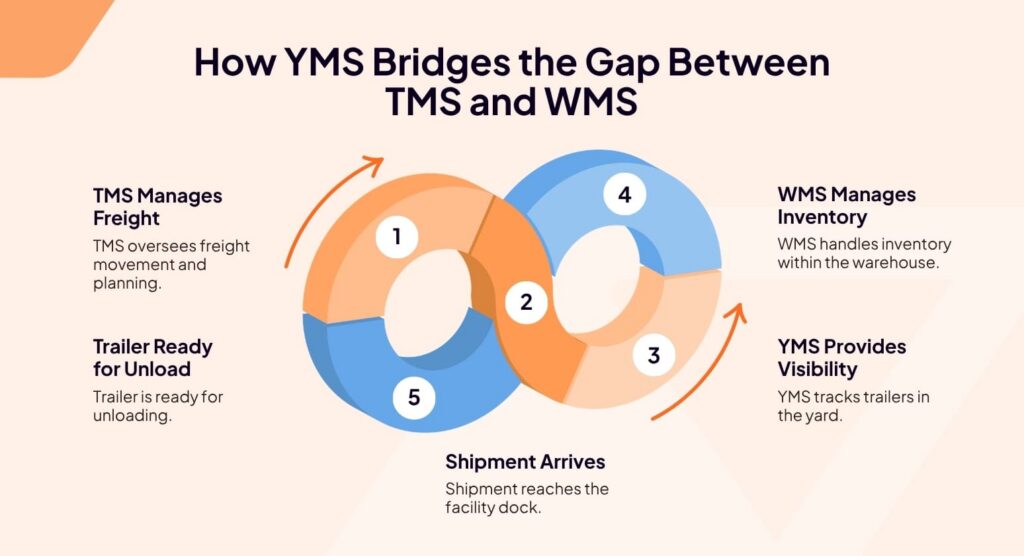
The following platforms include purpose-built eBOL systems that digitize shipment documentation, yard management systems with BOL capabilities, TMS and WMS modules handling document workflows, and visibility platforms adding BOL features.
Vector
Vector leads with yard management and connected facility operations, with eBOL built into the driver workflow rather than added on. Its connected facility platform digitizes the entire shipment lifecycle through three integrated solutions.
The eBOL foundation captures legally binding electronic documents using AI imaging, electronic signatures, timestamps, and geocoordinate stamps.
This digital audit trail compresses your billing cycles from weeks to hours by providing instant access to Proof of Delivery and Proof of Shipment documentation.
Vector’s FastPass®, eBOL, and YMS synchronize through a shared data layer to create multi-player collaboration across shippers, carriers, and receivers.
Traditional YMS tools operate in isolation across the yard. Vector connects the entire supply chain from appointment scheduling through final delivery, enabling dynamic dock assignments that reduce OTIF penalties and rules-based yard task automation.
The platform connects to TMS, WMS, and ERP systems. No-code email integration serves teams without dedicated IT resources.
Strategic partnerships with Trimble for in-cab scanning and Platform Science for telematics extend documentation capabilities directly to drivers. Offline functionality queues digital packages until connectivity returns, ensuring continuous operations at facilities with inconsistent network coverage.
C3 Solutions
C3 Solutions focuses on trailer tracking and dock scheduling within distribution facilities.
The platform captures trailer movements, manages gate operations, and supports document workflows that include bill of lading processing. Your team can track trailer locations across the yard, assign dock doors dynamically, and coordinate driver check-in processes through the system’s gate management module.
The platform connects to warehouse management systems and transportation management systems through API integration, allowing yard data to flow into existing logistics operations.
C3’s document management capabilities enable your operations team to digitize paperwork at the gate and maintain audit trails for compliance reporting. The system supports standard yard operations, including appointment scheduling, detention tracking, and carrier communication.
Kaleris
Kaleris is a yard management and supply chain execution platform that incorporates document management capabilities alongside its core operational functions.
The platform focuses on logistics and distribution operations, handling yard movements, dock scheduling, and trailer tracking within distribution centers and manufacturing facilities.
Document workflows in Kaleris capture BOL data as part of broader yard operations rather than as a standalone electronic BOL solution. The system connects yard activities with warehouse management systems to coordinate inbound and outbound shipments.
Kaleris serves logistics teams managing complex multi-facility operations where yard coordination impacts overall supply chain performance.
The platform’s document capture supports compliance reporting and audit trail requirements while maintaining visibility into trailer locations and dock assignments across active operations.
YardView
YardView is a yard visibility and yard management solution, specializing in trailer tracking, driver activity monitoring, and real-time yard visibility. The platform captures check-in and check-out data, monitors trailer locations and activity throughout the yard, and generates documentation for shipment workflows.
YardView’s interface shows dock assignments, trailer status updates, and driver communication logs that help facility managers coordinate yard operations.
The system records timestamps and location data for each trailer movement. This documentation supports BOL processes by providing audit trails for pickup and delivery confirmations.
YardView connects to all legacy systems (WMS, TMS, ERP, and more) through API interfaces to synchronize dock schedules and inventory data.
Facility teams can view current yard capacity, identify bottlenecks at specific dock doors, and track detention time accumulation. The platform generates reports on trailer turn times and yard efficiency metrics that inform operational decisions and carrier performance discussions.
SAP
SAP offers both Transportation Management System (TMS) and Warehouse Management System (WMS) capabilities as part of its enterprise ERP and supply chain portfolio, with bill of lading functionality embedded within these applications.
The system handles BOL creation, modification, and tracking as part of shipment planning and execution workflows.
Document management functions integrate with SAP’s financial modules to support automated invoice processing and freight settlement. BOL data flows between SAP’s transportation management system and warehouse management modules, enabling coordinated planning across inbound and outbound logistics.
The platform captures delivery confirmations and proof of delivery documents to support billing processes. Integration with carrier systems occurs through EDI connections and API interfaces.
SAP’s approach embeds BOL functionality within existing financial and operational workflows rather than offering standalone document management.
This integration supports compliance reporting and audit trail requirements for organizations already operating within the SAP ecosystem. Implementation typically requires configuration to match specific business processes and document requirements.
Oracle
Oracle’s provides a Transportation Management System (TMS) through Oracle Transportation Management (OTM), with bill of lading functionality integrated into its transportation execution workflows.
The TMS includes document capture, electronic signature workflows, and proof of delivery tracking as part of its shipment execution modules.
Your team accesses BOL functionality through the same interface, managing route optimization, carrier selection, and freight audit processes.
The platform connects to Oracle’s warehouse management system and ERP applications through shared cloud infrastructure. This eliminates separate data entry across logistics and financial systems.
Your billing team receives delivery confirmations and supporting documents directly within the accounts payable workflow, reducing invoice processing time.
Oracle’s approach embeds BOL management within existing ERP and TMS operations rather than requiring separate document platforms. The system captures delivery exceptions, detention events, and carrier performance data that feeds into freight spend analytics and carrier scorecarding decisions your transportation team makes quarterly.
Manhattan Associates
Manhattan Associates delivers both Warehouse Management System (WMS) and Transportation Management System (TMS) solutions, with bill of lading capabilities available across its logistics execution platform.
Document workflows operate within the company’s WMS and TMS ecosystem, allowing facilities to capture and process shipping documentation alongside inventory and transportation operations.
The platform handles BOL creation, modification, and tracking as part of broader supply chain execution workflows. Teams can generate electronic bills of lading directly from warehouse management systems during order fulfillment.
The system captures signature data and delivery confirmations through mobile devices used by warehouse staff and drivers.
Manhattan Associates connects to enterprise systems through APIs and EDI connections. The platform supports document retention and audit trail requirements within its data management infrastructure.
BOL functionality integrates with the company’s labor management and yard management modules, enabling facilities to coordinate document processing with dock scheduling and trailer movements across their distribution operations.
Blue Yonder
Blue Yonder offers integrated WMS and TMS solutions, supporting bill of lading document workflows within its transportation and warehouse execution applications.
Your team accesses BOL functionality as part of the company’s supply chain execution suite, which connects transportation planning, warehouse operations, and order fulfillment into a coordinated workflow.
The platform captures shipping documentation during the execution process and routes BOL data between transportation management and warehouse management modules via API connections.
You can generate, modify, and track bills of lading within the broader shipment lifecycle, from order creation through final delivery confirmation.
Blue Yonder’s document management operates within its cloud-based architecture, allowing your logistics team to access BOL records alongside inventory data, shipment status, and carrier performance metrics.
The system supports standard EDI transactions for BOL exchange with carriers and trading partners, while maintaining document audit trails for compliance reporting across your supply chain operations.
Vector’s eBOL Turns Delivery Confirmation Into Instant Invoicing
Vector’s eBOL platform eliminates the paper bottlenecks that trap your freight budget in week-long billing delays and documentation disputes.
While other solutions offer yard management or document storage, Vector’s connected facility platform digitizes the entire shipment lifecycle from appointment through final delivery.
Key capabilities that compress your billing cycles:
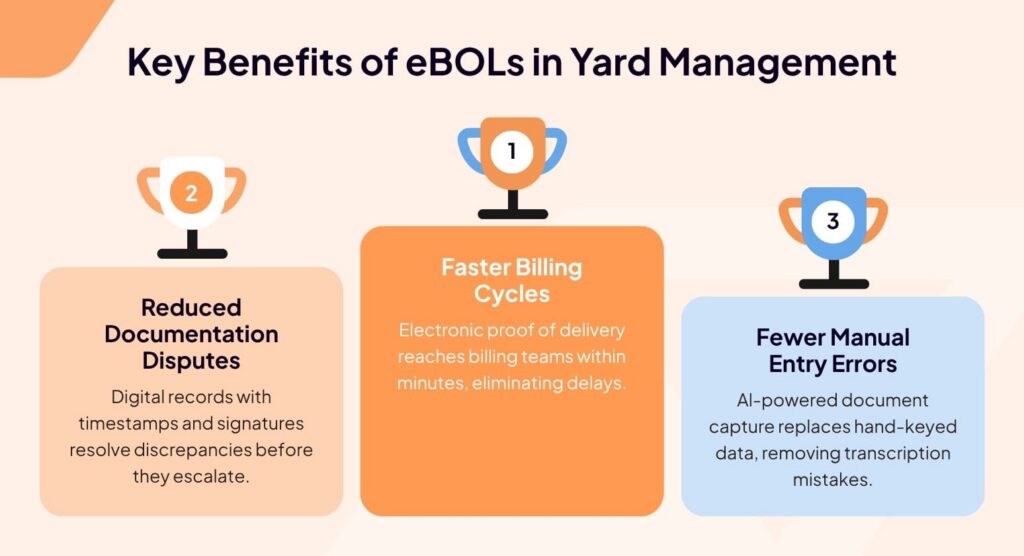
- Instant legal documentation — eBOL captures electronic signatures, timestamps, and geocoordinate stamps at delivery, creating legally binding Proof of Delivery the moment your driver completes unloading
- Error-free digitization — AI imaging converts paper documents at the gate or in the cab, eliminating manual entry mistakes that trigger invoice disputes
- Immediate POD access — Billing teams get proof of delivery within minutes instead of waiting weeks for paper returns
- Automated invoice processing — API connections sync delivery confirmation directly into your TMS and ERP systems, triggering instant invoicing workflows
- Complete audit trail — Every transaction creates digital documentation that prevents disputes before they start
Stop waiting weeks to bill what you delivered yesterday. See how Vector’s connected facility platform compresses your billing cycle.
Published on August 16, 2023
Last updated on July 30, 2026
Subscribe to stay updated on Vector and logistics trends
" " indicates required fields

Continue reading


Ready to transform your supply chain?
Increase efficiency and productivity. Say goodbye to delays, handwriting errors, and time-intensive manual data entry.